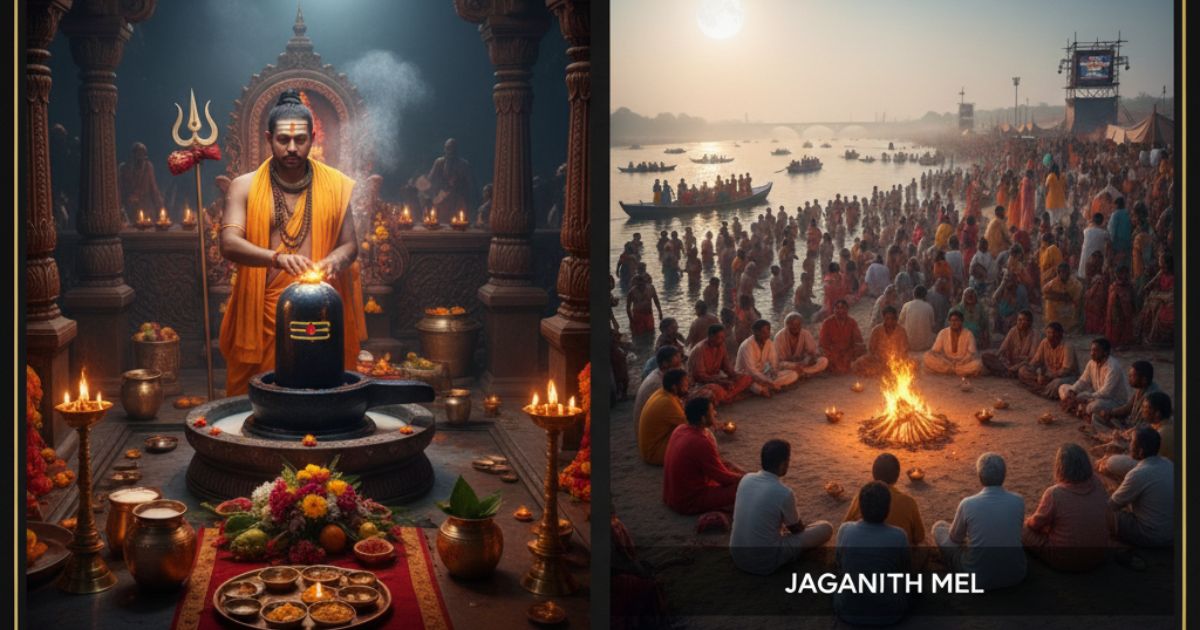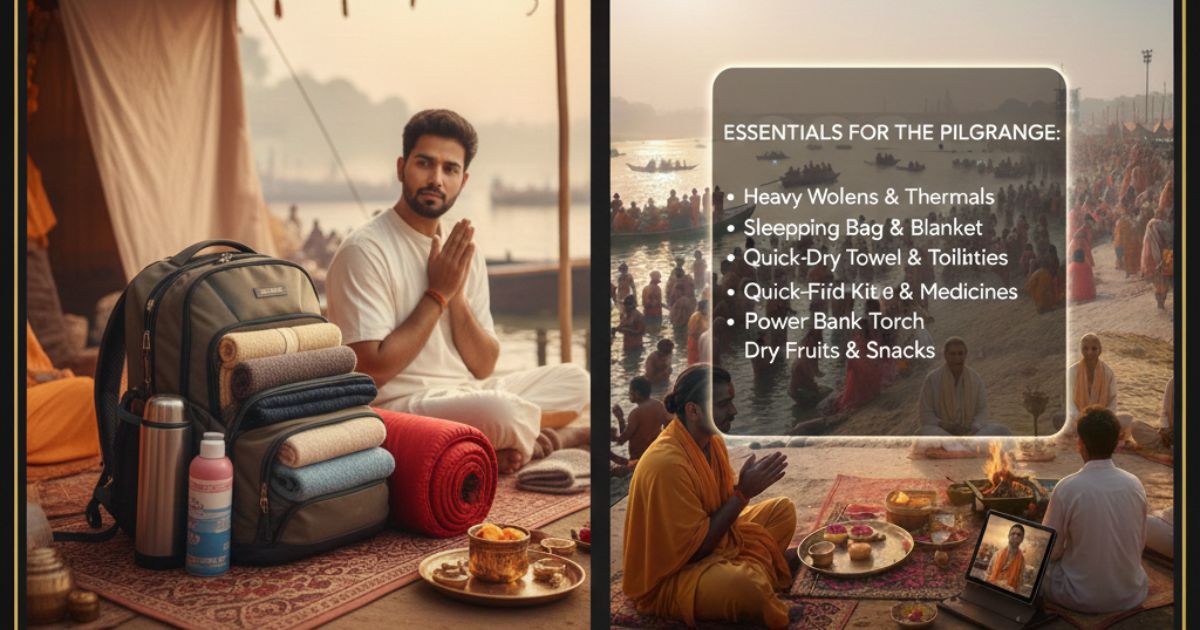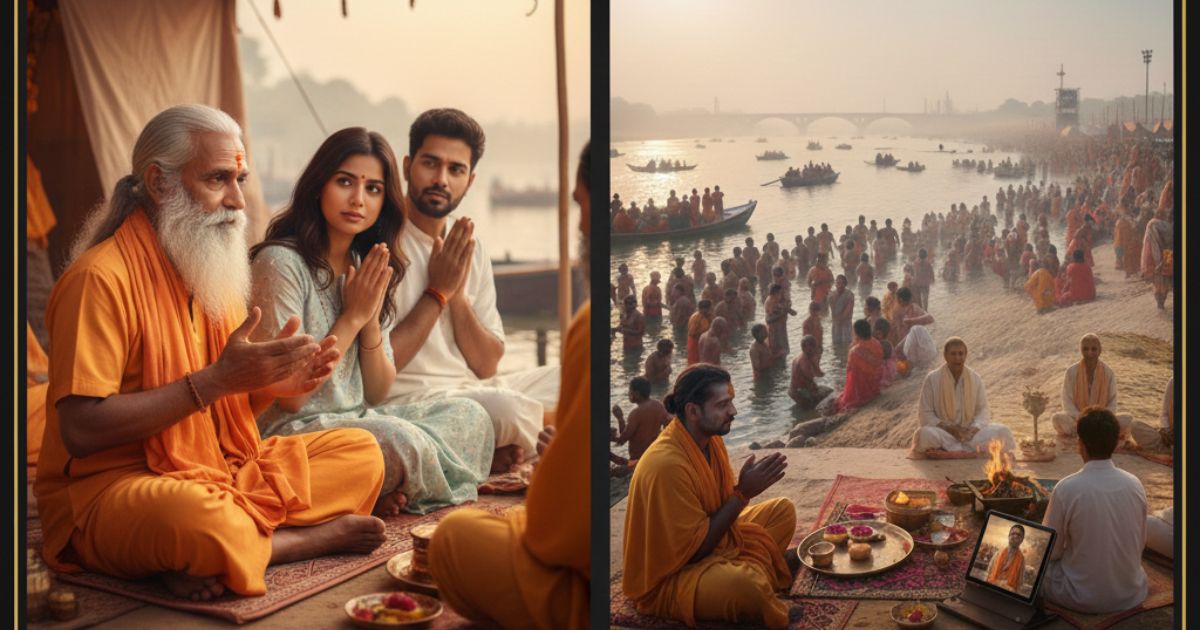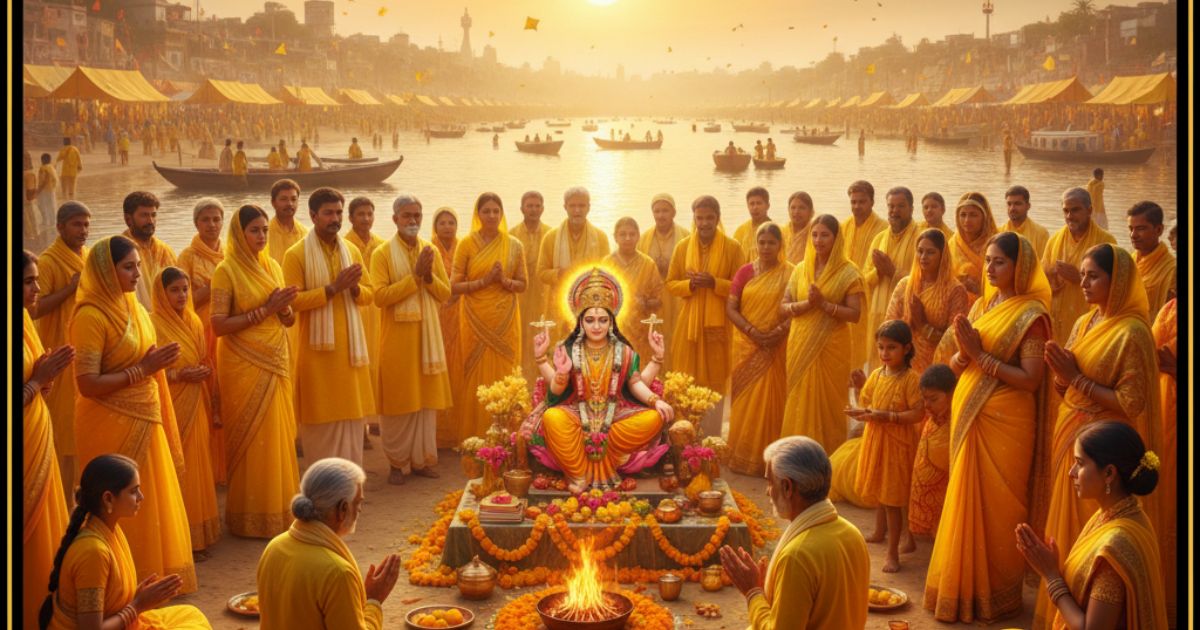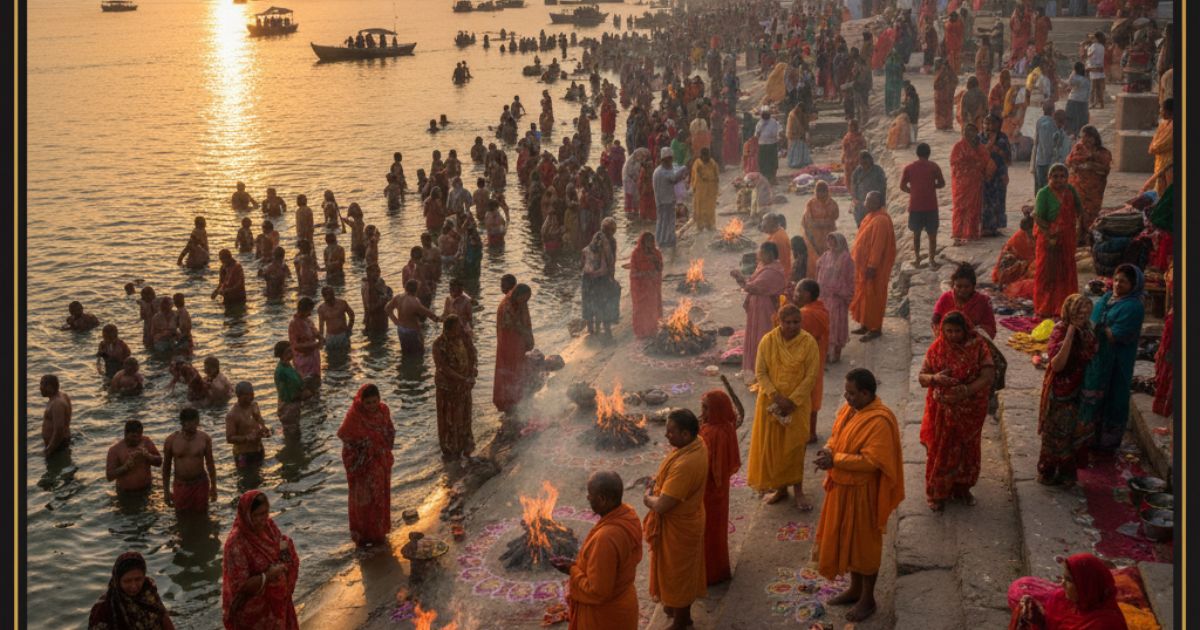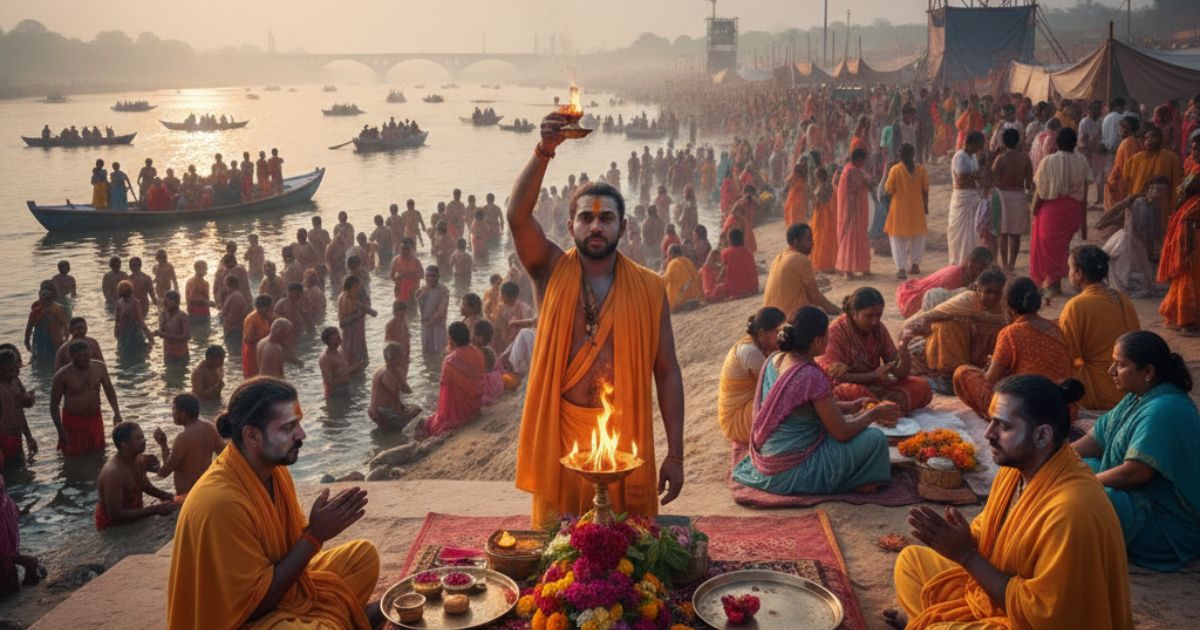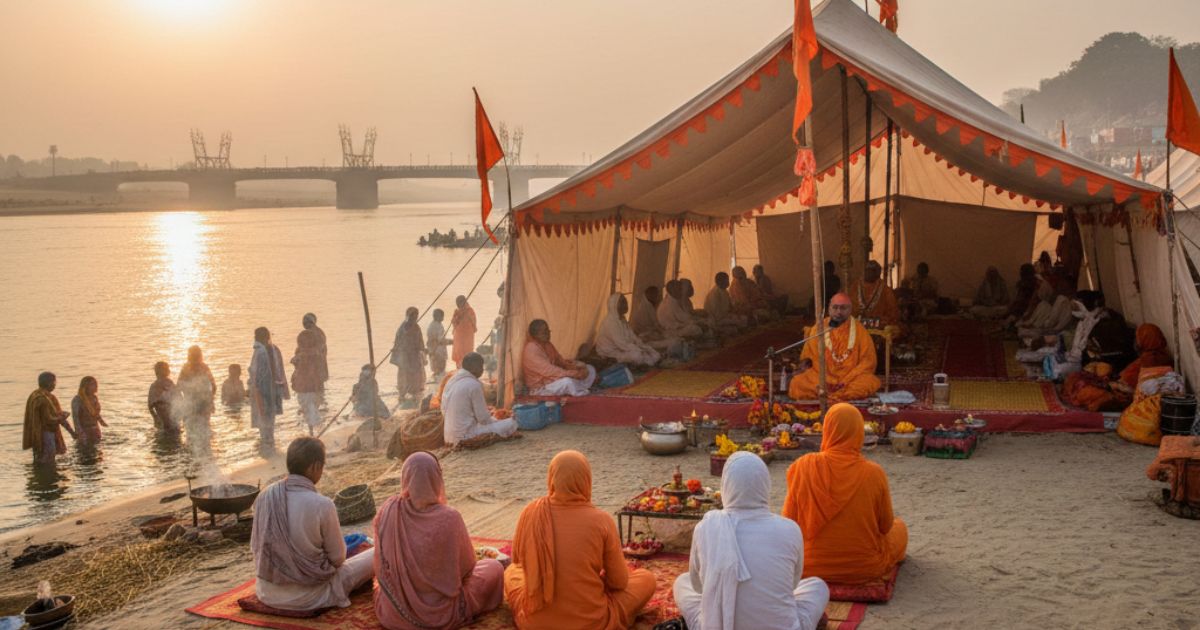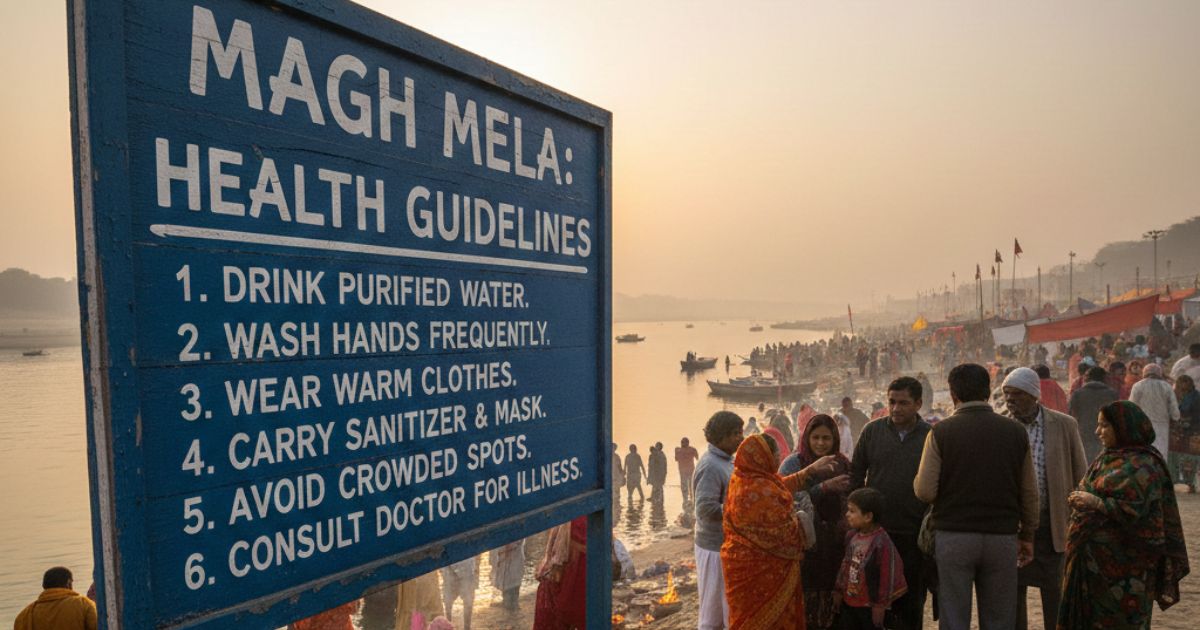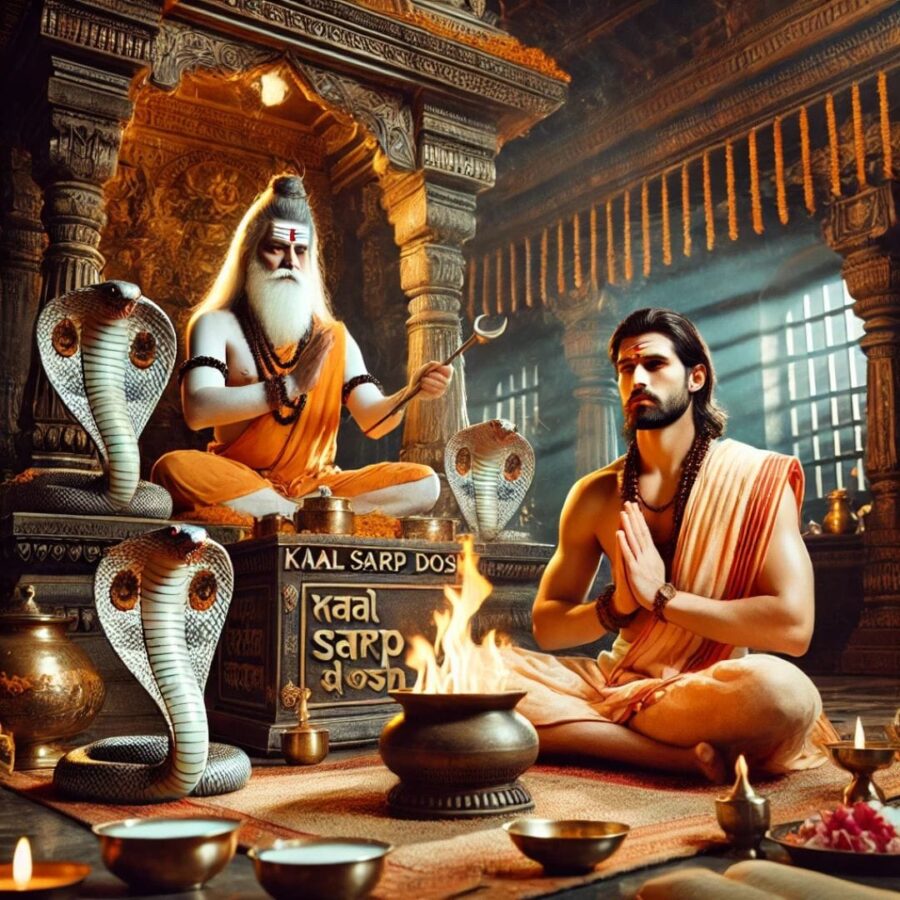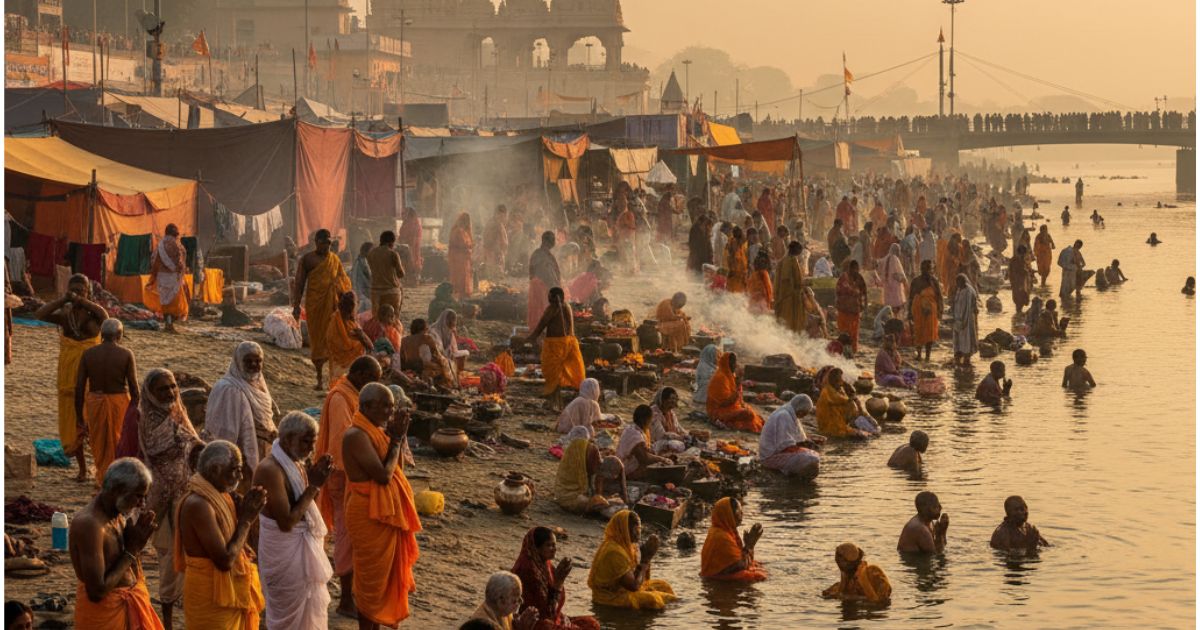
Experience the daily routine of Kalpvasis at Magh Mela Prayagraj, featuring sacred morning dips, meditation, yajnas, fasting, and deep spiritual discipline by the Ganga.
Picture the scene: It’s 3:30 AM, and the winter air at Prayagraj cuts like ice. While most of the world sleeps comfortably under warm blankets, thousands of souls stir awake on thin mats spread directly on the cold ground. These are the Kalpvasis—spiritual warriors who’ve taken a sacred vow to live an austere life for an entire month at Magh Mela. Their day hasn’t begun yet; in their world, it’s about to unfold with a precision that would humble any corporate schedule.
The kalpvas daily routine isn’t a casual spiritual vacation. It’s an intensive spiritual bootcamp that transforms ordinary humans into disciplined seekers. From pre-dawn baths in the freezing Ganga to sunset meditation, from minimal meals to maximum devotion—every moment is structured with purpose, every action infused with meaning.
What drives someone to embrace such rigorous austerities? What exactly fills their days from sunrise to sunset? And most intriguingly—what profound transformations occur when you surrender to this ancient sangam routine for thirty consecutive days? Let’s walk through a complete day in the life of a Kalpvasi, understanding not just the schedule, but the spiritual science behind each practice.
Who are Kalpvasis Prayagraj? Understanding the Sacred Vow
Before diving into the daily routine, let’s understand who Kalpvasis are. The word “Kalpvas” comes from “kalpa” (a cosmic time period) and “vas” (to reside). Kalpvasis are pilgrims who vow to spend the entire Hindu month of Magh (January-February) living at the sacred Triveni Sangam in Prayagraj.
But it’s not merely about location—it’s about complete lifestyle transformation. Kalpvasis observe strict vows:
Physical Austerities:
- Sleeping on the ground (no beds or mattresses)
- Wearing simple, minimal clothing
- Bathing in the cold Ganga at least twice daily
- Following sattvic diet with severe restrictions
- No modern comforts or luxuries
Mental Disciplines:
- Daily meditation and mantra chanting
- Attending spiritual discourses
- Maintaining silence during specific hours
- Controlling thoughts and emotions
- Practicing detachment from worldly concerns
Spiritual Commitments:
- Regular puja and worship
- Scripture study
- Service to fellow pilgrims
- Charity and donations
- Maintaining purity in thought, word, and deed
These aren’t weekend warriors of spirituality—they’re committing to a month of intensive spiritual practice that ancient sages prescribed for karmic cleansing and spiritual elevation.
The Pre-Dawn Hours: Beginning Before Sunrise (3:00 AM – 6:00 AM)
Waking Up in Brahma Muhurta
The kalpvas rituals daily begin in what yogis call “Brahma Muhurta”—approximately 1.5 hours before sunrise, around 3:30-4:00 AM. This is considered the most sattvic (pure) time of day when spiritual practices yield maximum benefit.
There’s no alarm clock here. Kalpvasis train their bodies to wake naturally at this hour. The camp stirs to life quietly—no loud noises, no harsh lights. Fellow seekers wake each other gently, and the day begins with:
Morning Ablutions:
- Simple washing of face and hands
- Cleaning teeth with neem twigs (traditional method)
- Preparation of bath materials
- Wearing clean bathing clothes
Pre-Bath Prayers: Before heading to the Ganga, Kalpvasis recite morning invocations:
- “Om Gange Cha Yamune Chaiva…” (inviting sacred rivers)
- Personal sankalp (daily intention setting)
- Gratitude prayers for another day of spiritual practice
The cold is biting, especially in January when temperatures hover near freezing. Yet this is exactly when they prepare to immerse themselves in the glacial waters.
First Sangam Routine: The Sacred Bath
Between 4:30-5:30 AM, the first of two mandatory daily baths takes place. This isn’t a quick splash—it’s a complete ritual:
The Bathing Sequence:
- Approach with Reverence: Walking to the sangam with prayers, never running or casual
- Ganga Invocation: Reciting specific mantras while standing at the bank
- First Immersion: Complete dip while chanting “Om Namah Shivaya” or “Gange Cha Yamune Chaiva”
- Triple Dip: Traditional practice of three complete immersions
- Mantra Japa: Standing waist-deep, chanting 108 repetitions of chosen mantra
- Water Collection: Filling containers with holy water for camp use
- Gratitude Prayer: Thanking Ganga Ma before leaving the water
The Physical Reality: The water temperature in January ranges from 10-15°C (50-59°F). For perspective, Olympic swimmers train in 25-28°C water. Yet Kalpvasis immerse not just once, but multiple times daily. The shock to the system is immense, but they believe this physical tapas (austerity) burns karmic impurities.
Health Considerations: Interestingly, despite the cold, most long-term Kalpvasis report improved immunity and circulation. The sudden cold exposure triggers the body’s survival mechanisms, releasing adrenaline and endorphins, creating natural resilience. Still, gradual acclimatization is crucial—first-timers should start slowly.
Morning Spiritual Practices (6:00 AM – 10:00 AM)
Sandhya Vandana and Morning Prayers
After returning from the first bath, Kalpvasis don’t rush to breakfast. The morning is the most spiritually productive time, and they maximize it:
Sandhya Vandana (Twilight Worship): This ancient Vedic practice performed at sunrise includes:
- Achamana (sipping water for internal purification)
- Pranayama (controlled breathing exercises)
- Gayatri Mantra chanting (108 times minimum)
- Surya Namaskar (sun salutations)
- Offerings to the sun with water
This entire process takes 30-45 minutes and must be completed before the sun fully rises.
Meditation and Japa
Following Sandhya Vandana comes the core spiritual practice:
Structured Meditation:
- Finding a quiet spot in the camp or near the sangam
- Sitting on a simple mat or deer skin (if traditional)
- Adopting padmasana (lotus) or sukhasana (easy pose)
- Focusing on breath or chosen deity
- Duration: 1-2 hours
Japa (Mantra Repetition): Most Kalpvasis have a daily japa target—anywhere from 1,000 to 10,000 repetitions of their chosen mantra. Using mala beads, they maintain count while keeping awareness focused.
Popular mantras for kalpvas rituals daily:
- “Om Namah Shivaya”
- “Hare Rama Hare Krishna”
- Gayatri Mantra
- “Om Gam Ganapataye Namaha”
- Personalized mantras from their guru
First Meal and Dietary Observances
Only after 2-3 hours of spiritual practice does food consumption begin, typically around 8:00-9:00 AM.
Morning Meal Components:
- Fresh fruits (usually bananas and seasonal fruits)
- Light khichdi (rice and lentil porridge)
- Simple vegetables (no onion, garlic, or heavy spices)
- Milk (if not fasting)
- Dry fruits and nuts
Eating Protocol:
- Meal consumed in silence or with spiritual conversation only
- Sitting on the ground, never at tables
- Eating with hands (right hand only)
- Consuming only what’s needed, no wastage
- Offering food to God before eating (prasad mentality)
The sangam routine emphasizes that food is fuel for spiritual practice, not sensory entertainment.
Midday Kalpvas Rituals Daily (10:00 AM – 2:00 PM)
Spiritual Discourses and Satsang
Late morning is typically designated for learning and community spiritual practice:
Satsang (Company of Truth):
- Gathering under shamiana (temporary tent structures)
- Listening to spiritual teachers and sadhus
- Discussions on scriptures like Bhagavad Gita, Upanishads, Ramayana
- Devotional singing (bhajans and kirtans)
- Questions and spiritual guidance
These sessions aren’t passive lectures—they’re interactive explorations of dharma, karma, and moksha. Renowned spiritual teachers often visit during Magh Mela, offering Kalpvasis access to wisdom that might take years to acquire otherwise.
Second Sangam Bath
Around noon (12:00-1:00 PM), the second mandatory bath occurs:
Afternoon Bath Significance: While morning bath focuses on purification, the afternoon bath is considered:
- Energizing and rejuvenating
- Optimal for mantra charging (mantras gain extra potency at noon)
- Suitable for sun worship rituals
- Preparation for the main meal
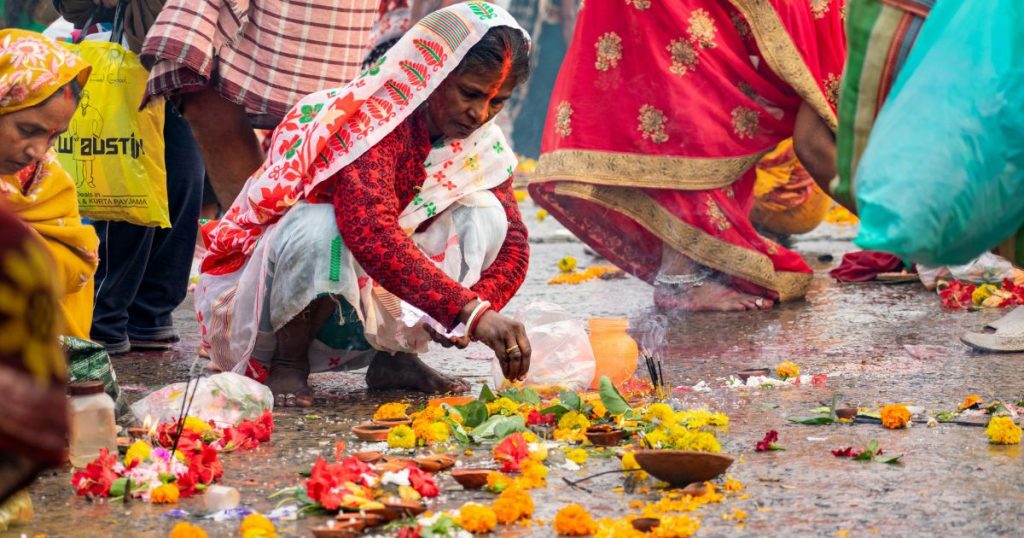
The ritual sequence mirrors the morning bath but often includes additional offerings:
- Flower garlands to Ganga
- Floating diyas (oil lamps)
- Charitable acts (distributing prasad or clothes to needy pilgrims)
Main Meal and Rest Period
Following the second bath and noon prayers comes the main meal (1:00-2:00 PM):
Lunch Components:
- Rice or chapatis
- Dal (lentil curry)
- Two simple vegetable preparations
- Yogurt or buttermilk
- Optional sweet dish (jaggery-based, not sugar)
Post-Meal Rest: Unlike modern life where lunch leads to sluggishness, the sattvic Kalpvas meal energizes rather than depletes. Still, a brief rest period (30-60 minutes) is observed:
- Light rest, not deep sleep
- Never lying flat (sitting or reclining slightly)
- Often spent in gentle scripture reading
- Digestive walk around the camp
The austerities aren’t about suffering—they’re about optimization. The body needs recovery time between intensive practices.
Afternoon Austerities and Practices (2:00 PM – 6:00 PM)
Self-Study and Scripture Reading
Afternoons are ideal for swadhyaya (self-study):
Study Practices:
- Reading sacred texts (Vedas, Puranas, Gita)
- Copying verses in notebooks
- Memorizing shlokas (Sanskrit verses)
- Contemplating philosophical concepts
- Writing spiritual journals or diary entries
Many Kalpvasis report that insights gained during Magh Mela study stay with them for life. The combination of austere living and focused study creates extraordinary mental clarity.
Community Service and Seva
Karma Yoga (selfless service) is integral to the kalpvas daily routine:
Service Activities:
- Helping elderly or sick fellow Kalpvasis
- Distributing food or blankets to needy pilgrims
- Cleaning common camp areas
- Assisting in organizing satsangs
- Guiding first-time visitors
- Participating in larger community projects
Service isn’t an obligation—it’s an opportunity to practice compassion and overcome ego. When everyone lives with minimal possessions, the impulse to help naturally emerges.
Evening Preparations
As sunset approaches (5:00-6:00 PM), preparations begin for evening rituals:
Preparation Activities:
- Gathering puja materials
- Preparing diyas for evening aarti
- Final touches to personal altars
- Changing into clean evening clothes
- Mental preparation for the day’s culmination
There’s a palpable shift in energy as evening descends. The busy, service-oriented afternoon gives way to introspective, devotional evening.
Sunset Rituals and Evening Routine (6:00 PM – 9:00 PM)
Sandhya Aarti at Sangam
The evening Ganga Aarti is the emotional and spiritual peak of the daily sangam routine:
Aarti Experience:
- Thousands gathering at the sangam banks
- Hundreds of diyas floating on the river
- Synchronized chanting of prayers
- Waving of large ceremonial lamps
- Musical accompaniment (bells, drums, conches)
- Collective energy creating palpable spiritual vibration
For Kalpvasis, this isn’t spectacle—it’s communion with the divine. Standing in the twilight, participating in millennia-old tradition, individual identity dissolves into collective devotion.
Sandhya Vandana (Evening): Similar to morning practice but adapted for sunset:
- Facing west toward setting sun
- Offering water (arghya) to the sun
- Evening Gayatri recitation
- Transition prayers from day to night
Final Meal Before Sunset
Critical rule of kalpvas rituals daily: no food consumption after sunset:
Evening Meal (Before 6:30 PM):
- Light meal, smaller than lunch
- Often just fruits and milk
- Some Kalpvasis skip this entirely (eating only once daily)
- Consumed well before darkness falls
The prohibition on post-sunset eating serves multiple purposes:
- Aids digestion (body isn’t processing food during sleep)
- Maintains alertness for evening practices
- Disciplines sensory desires
- Aligns with natural circadian rhythms
Night Prayers and Bhajans
After sunset, spiritual practices intensify rather than wind down:
Evening Activities (7:00-9:00 PM):
- Group bhajan sessions (devotional singing)
- Individual prayer and meditation
- Recitation of evening prayers
- Final mantra japa rounds
- Reading sacred texts by lamplight
The atmosphere becomes deeply meditative. The cold intensifies, but the warmth of collective devotion sustains everyone.
Night Discipline: Sleep and Austerities
Bedtime (9:00-10:00 PM):
Kalpvasis retire early:
Sleep Protocol:
- Sleeping directly on ground or thin mat
- Minimal blankets (part of austerity)
- Simple pillow or bundled cloth
- No electronic devices or entertainment
- Maintaining awareness even while falling asleep (yogic sleep)
Night Austerities: The ground sleeping isn’t about discomfort—it’s about:
- Staying connected to earth’s energy
- Preventing excessive comfort attachment
- Maintaining alertness and discipline
- Traditional belief that earth absorbs negative energy
Most Kalpvasis report that after initial days of discomfort, the body adapts remarkably. Many experience deeper, more restful sleep than in their regular beds at home.
Midnight Practices (Optional): Serious practitioners sometimes wake at midnight for:
- Additional meditation
- Special tantric or yogic practices
- Silent contemplation
- Extra japa rounds
Then back to sleep before the 3:30 AM wake-up call begins the cycle again.
Special Kalpvas Rituals Daily on Auspicious Days
Certain days during Magh Mela intensify the routine:
Makar Sankranti:
- Extra baths (sometimes 3-4 times)
- Elaborate pujas
- Longer meditation sessions
- Special food offerings and charity
Mauni Amavasya:
- Complete silence for 24 hours
- No speaking except mantras
- Extended fasting (many eat nothing all day)
- Midnight meditation vigils
Basant Panchami:
- Goddess Saraswati worship
- Knowledge-focused rituals
- Yellow-colored food offerings
- Special music and arts celebrations
Maghi Purnima:
- Final bath before concluding Kalpvas
- Grand pujas and celebrations
- Increased charity
- Emotional farewells to Ganga Ma
These special days break the routine monotony and provide peaks of spiritual intensity within the already rigorous month.
Physical and Mental Challenges of the Sangam Routine
Physical Challenges:
- Cold Exposure: January temperatures test physical endurance daily
- Hard Sleeping Surface: Back pain and body aches are common initially
- Restricted Diet: Hunger and cravings persist for first 2-3 weeks
- Minimal Hygiene Facilities: Adjusting to basic sanitation
- Fatigue: Constant activity from 3:30 AM to 10:00 PM is exhausting
- Crowd Management: Navigating millions during peak days
Mental Challenges:
- Boredom: The repetitive routine can feel monotonous
- Homesickness: Missing family and modern comforts
- Doubt: Questioning whether the austerities are worth it
- Irritability: Lack of sleep and comfort strains patience
- Ego Battles: Pride about observing Kalpvas versus authentic humility
- Maintaining Focus: Distractions from fellow pilgrims and surroundings
The Transformation: Most Kalpvasis report that challenges peak around day 10-15, then dramatically ease. The body adapts, the mind settles, and what initially felt impossible becomes natural. By week three, many experience states of continuous peace and joy they’ve never known.
Spiritual Benefits of Following Kalpvas Daily Routine
Why endure such rigorous discipline? The benefits, according to both tradition and practitioner testimony:
Immediate Benefits:
- Mental Clarity: Simplified living creates extraordinary mental focus
- Emotional Stability: Regular spiritual practice balances emotions
- Physical Health: Despite austerity, many report improved health
- Community Connection: Deep bonds form with fellow Kalpvasis
- Spiritual Experiences: Heightened awareness, visions, insights
Long-Term Benefits:
- Karmic Cleansing: Belief that ancestral and personal karma dissolves
- Discipline Transfer: Enhanced self-control in regular life
- Perspective Shift: Material attachments naturally reduce
- Spiritual Foundation: Establishes lifelong practice patterns
- Inner Peace: Lasting contentment that transcends circumstances
Traditional Claims: Ancient texts promise that completing Kalpvas with proper discipline grants:
- Liberation from karmic cycles (moksha)
- Fulfillment of heartfelt desires
- Protection from misfortune
- Elevation to higher consciousness
- Merit equivalent to thousands of lifetimes
Whether these claims are literal or metaphorical, the transformative power of the kalpvas daily routine is undeniable.
Modern Adaptations: Can You Partially Observe Kalpvas?
Not everyone can commit to full month-long Kalpvas. Modern adaptations include:
Mini Kalpvas (One Week):
- Observing the complete routine for 7 days
- Focusing on especially auspicious dates
- Maintaining all disciplines but shorter duration
Day Kalpvas:
- Following the full sangam routine for a single day
- Multiple baths, sattvic diet, spiritual practices
- Returning home at night
Weekend Kalpvas:
- Friday evening to Sunday evening observation
- Partial adherence to sleeping and dietary rules
- Intensive spiritual practice condensed
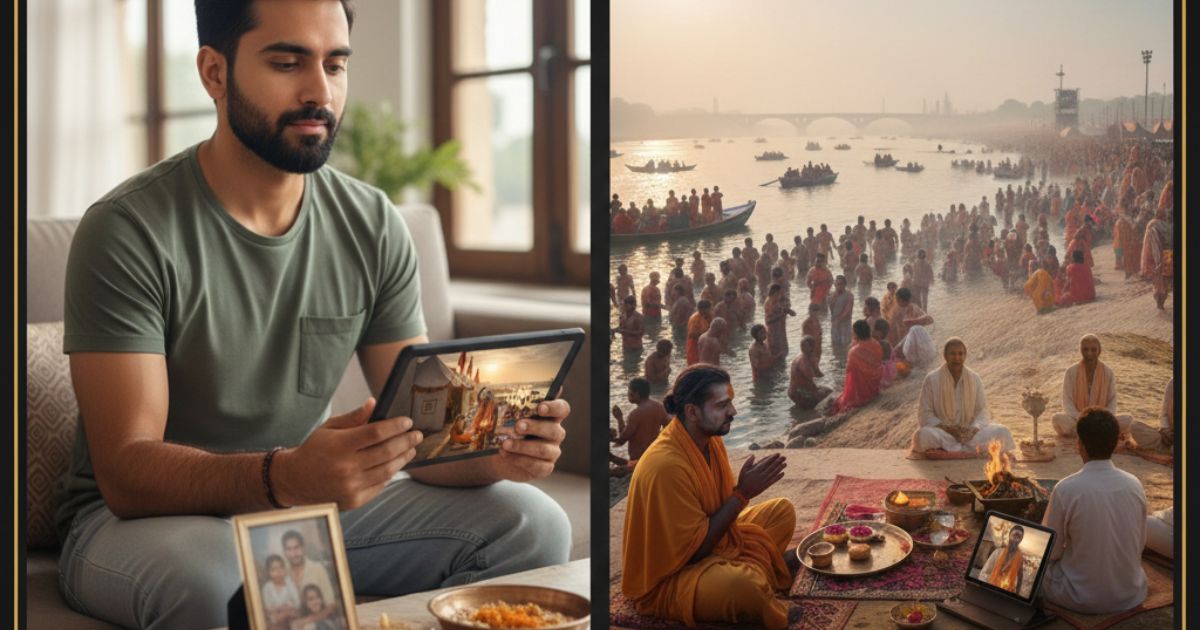
Kalpvas at Home:
- Following the spiritual schedule from your home
- Two daily baths in available water
- Diet and discipline maintained
- Virtual participation in Magh Mela satsangs
While traditional purists might question partial observance, the principle remains: engage with the practices to whatever degree possible. Some spiritual discipline beats none, and even abbreviated Kalpvas generates significant benefits.
Conclusion
The kalpvas daily routine isn’t for the faint-hearted. It’s a complete lifestyle immersion that challenges every aspect of your being—physical comfort, mental habits, emotional patterns, and spiritual assumptions. From the 3:30 AM wake-up in freezing cold to the ground-sleeping at night, every moment is structured to break down the ego and build up the soul.
Yet within this rigorous structure lies profound freedom. When external comforts are stripped away, internal strength emerges. When sensory indulgences are minimized, spiritual sensitivity amplifies. When days follow a sacred pattern, the eternal breaks through the temporal.
The sangam routine followed by Kalpvasis for centuries continues because it works. It transforms ordinary individuals into extraordinary seekers. It converts religious curiosity into spiritual conviction. It changes lives at the deepest levels.
Whether you’re planning full Kalpvas, considering a shorter version, or simply seeking to understand this remarkable tradition, remember: the kalpvas rituals daily aren’t about suffering—they’re about liberation. They’re not punishment but purification. They’re not restrictions but freedom from the truly limiting forces in life—ignorance, attachment, and ego.
As thousands gather annually at the sacred Triveni Sangam to undertake these ancient austerities, they’re participating in something far greater than themselves. They’re connecting with an unbroken spiritual lineage, tapping into collective devotional energy, and discovering that when you surrender completely to a higher purpose, you find yourself in ways you never imagined.
May your understanding of Kalpvas inspire your own spiritual journey, whatever form it takes.
FAQs About Kalpvasis at Magh Mela Prayagraj
1. Can women observe the full kalpvas daily routine, including during menstruation?
Yes, women absolutely can and do observe Kalpvas. Regarding menstruation, traditional rules suggest temporary modification during those days: women might skip the ritual Ganga baths (or take them without immersion), avoid temple entries, and focus on meditation and japa instead. However, many modern spiritual teachers encourage women to follow their comfort and conviction—some continue all practices without interruption, while others observe traditional breaks. The key is maintaining the spiritual intention regardless of physical modifications. AstroInsights.guru provides personalized guidance for women navigating these questions, balancing tradition with individual circumstances. Pregnancy and nursing mothers should significantly modify the austerities, prioritizing health while maintaining spiritual practice.
2. What happens if I break the kalpvas rituals daily unintentionally—does the entire month become invalid?
No, the month doesn’t become “invalid,” though traditional texts do emphasize consistency. If you unintentionally miss a bath due to illness, oversleep, or eat prohibited food by mistake, the remedy is: immediate recognition and apology (praschit), increased spiritual practice that day (extra japa or meditation), possible donation or charity, and renewed commitment moving forward. The spiritual benefit comes from sincere effort and discipline, not mechanical perfection. Even masters acknowledge that maintaining absolute consistency for 30 days challenges everyone. What matters is your overall sincerity and the majority pattern of your observance. Some traditions prescribe specific praschit (corrective) rituals for different lapses—AstroInsights.guru’s pandits can guide you through appropriate remedies for your situation.
3. How do Kalpvasis manage modern necessities like medications, phone communication, or emergencies?
Kalpvas requires balance between spiritual idealism and practical reality. Medications: Essential medicines are absolutely permitted—spiritual practice shouldn’t compromise health. Kalpvasis take prescribed medications as needed. Phone Communication: This is debated. Purists avoid phones entirely or use minimally for emergencies only. Moderate approach allows brief daily check-ins with family, avoiding entertainment or social media. Emergencies: Family emergencies, health crises, or urgent work matters justify temporarily leaving Kalpvas. You can return and continue if possible. The principle is: spiritual practice supports life, not negates it. Experienced Kalpvasis maintain “emergency contacts” with camp neighbors who can reach them if needed. Modern Kalpvasis often designate one family member as liaison, checking in briefly once daily or every few days.
4. Is the sangam routine physically sustainable for elderly or health-compromised individuals?
Kalpvas can be adapted for different physical capabilities. Elderly Adaptations: Fewer or shorter baths (one daily instead of two), warmer bathing times (avoiding pre-dawn cold), additional bedding/cushioning, more substantial meals, shorter meditation periods, assistance with walking and activities. Health Compromises: Those with chronic conditions should consult doctors before Kalpvas. Modifications might include: heated water baths instead of river immersion, medications without fasting interference, proper dietary adjustments, avoiding extreme temperature exposure. The spiritual essence—sincere practice, devotion, simplified living—matters more than physical extremes. Many elderly Kalpvasis observe “light Kalpvas” with reduced austerities but full devotional commitment. AstroInsights.guru’s consultations help design modified routines that maintain spiritual integrity while respecting physical limitations.
5. After completing Kalpvas, how do I transition back to normal life without losing the spiritual gains?
This is the most crucial question, as many Kalpvasis struggle with post-Kalpvas integration. Gradual Transition: Don’t immediately resume all old habits. Week 1: Maintain early rising, daily bath routine, simplified diet. Week 2-3: Gradually reintroduce normal schedule while keeping morning spiritual practice. Month 2 onward: Establish permanent practice routine. Maintain Core Practices: Daily meditation (even 20 minutes), regular scripture reading, weekly fasting or dietary discipline, monthly charitable acts, annual spiritual retreat. Community Connection: Stay in touch with fellow Kalpvasis, join local spiritual groups, attend satsangs regularly. Environmental Design: Create home altar, minimize unnecessary possessions, reduce entertainment consumption, maintain sattvic diet practices. AstroInsights.guru’s Support: We offer post-Kalpvas integration consultations, helping design sustainable spiritual practices aligned with your regular life responsibilities. The goal isn’t replicating Kalpvas daily—it’s carrying its essence forward permanently.
Expert Guidance from AstroInsights.guru for Kalpvas Prayagraj
Undertaking Kalpvas, whether full or partial, benefits enormously from expert guidance:
Connect with AstroInsights.guru:
- 🌐 Website: astroinsights.guru
- 📞 Phone: +916306407641
- 📧 Email: astroinsights.guru@gmail.com
- 🤖 AstroInsights AI: https://bit.ly/astroguru_ai