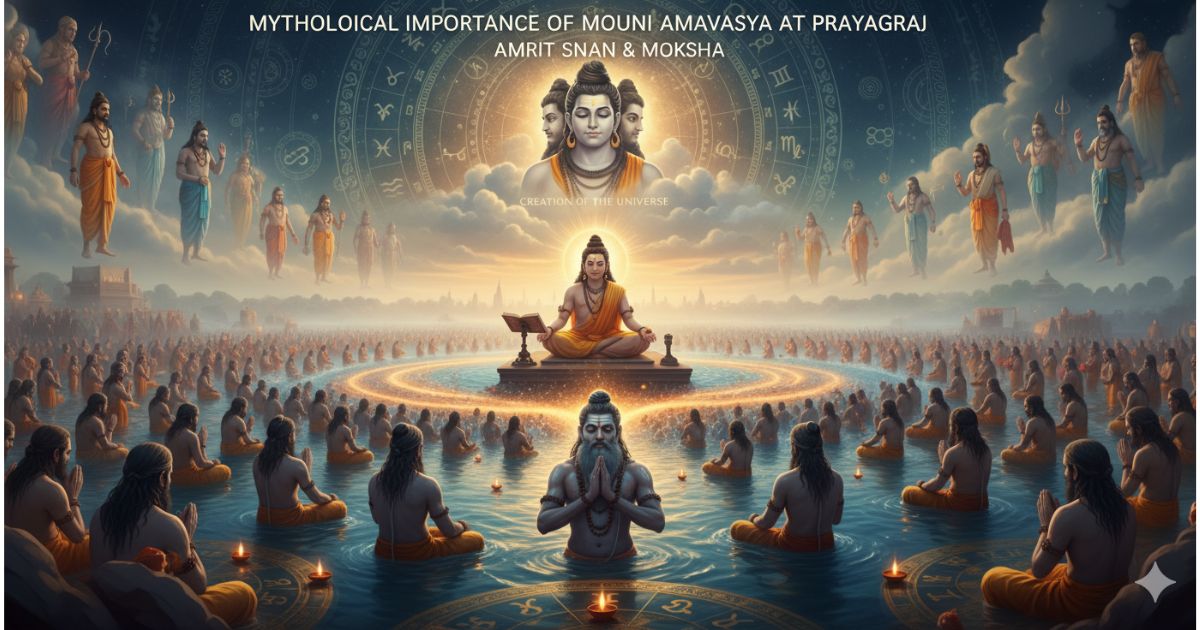
Mythological importance of Mauni Amavasya at Prayagraj holds deep Vedic significance. Explore its mythological roots, rituals of silence, and the divine power of holy bathing in the Ganga.
Imagine a day so sacred that even the gods descend from their celestial abodes to bathe in earthly waters. A day when silence becomes more powerful than the mightiest mantras. A day when the veil between worlds grows paper-thin, allowing mortals to touch eternity. This is Mauni Amavasya at Prayagraj—the holiest day of the holiest month at the holiest place.
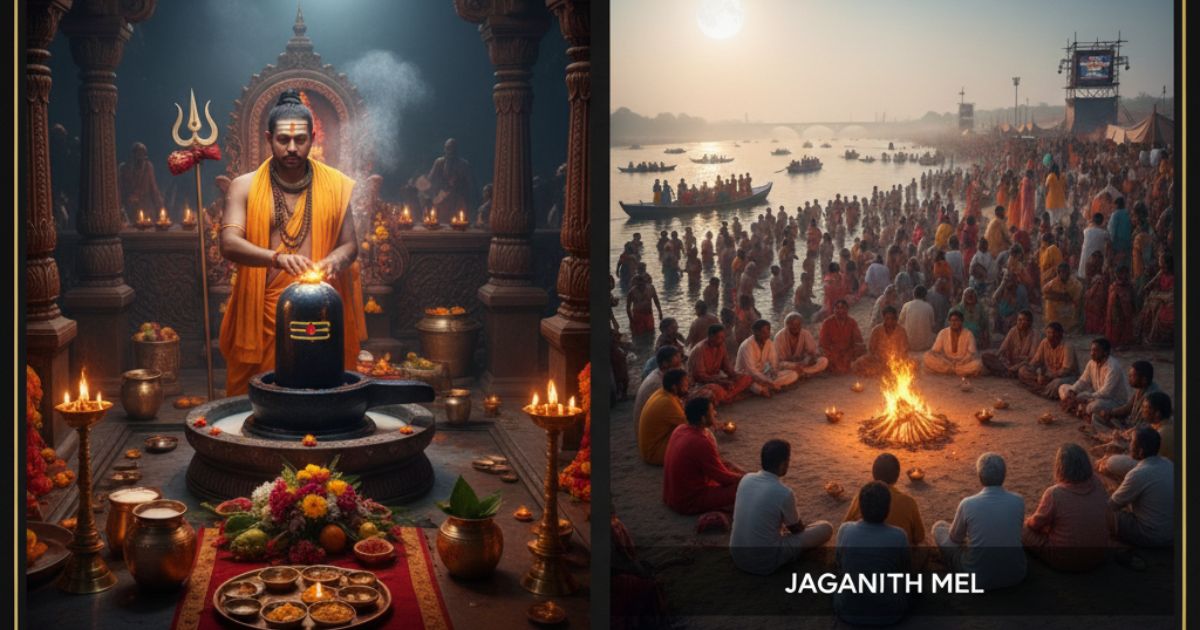
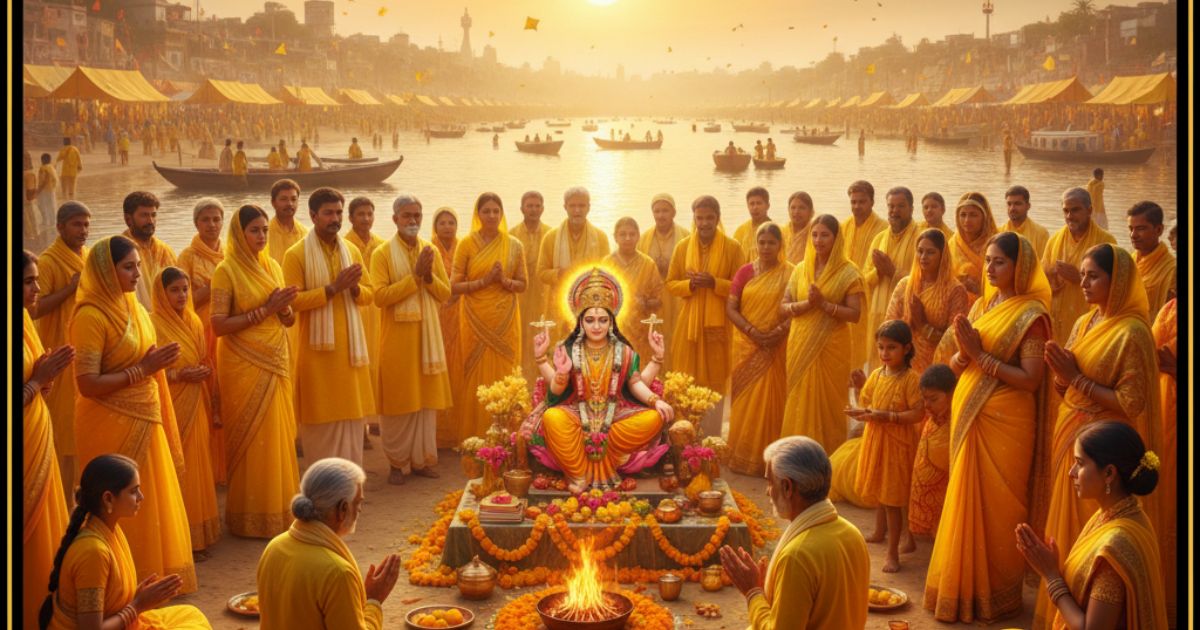
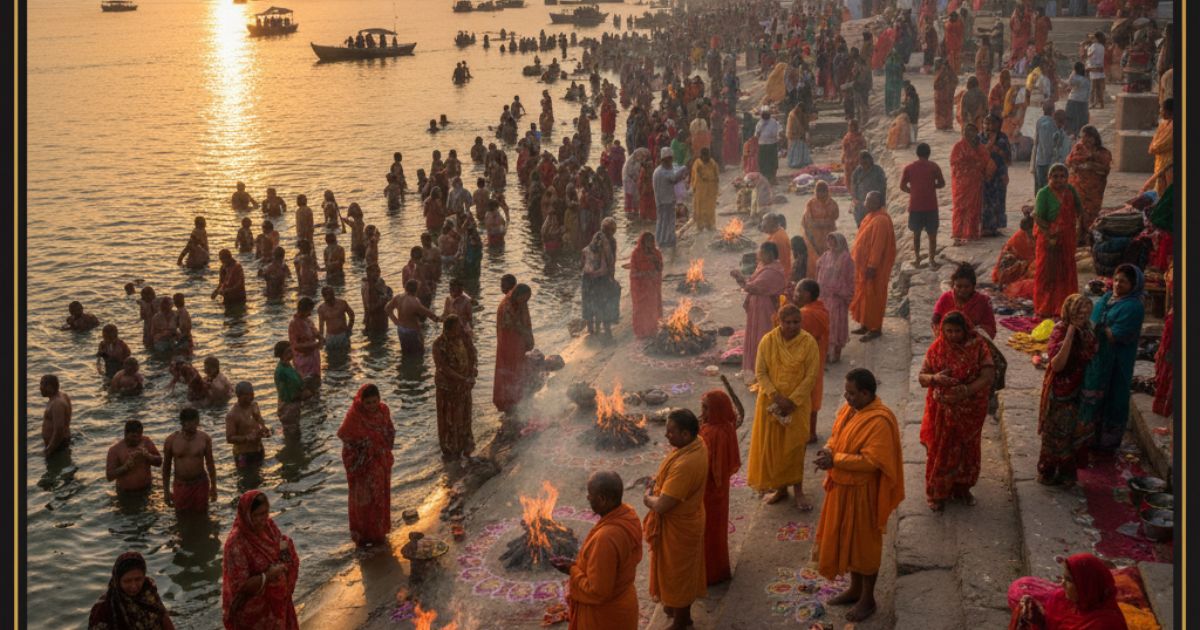
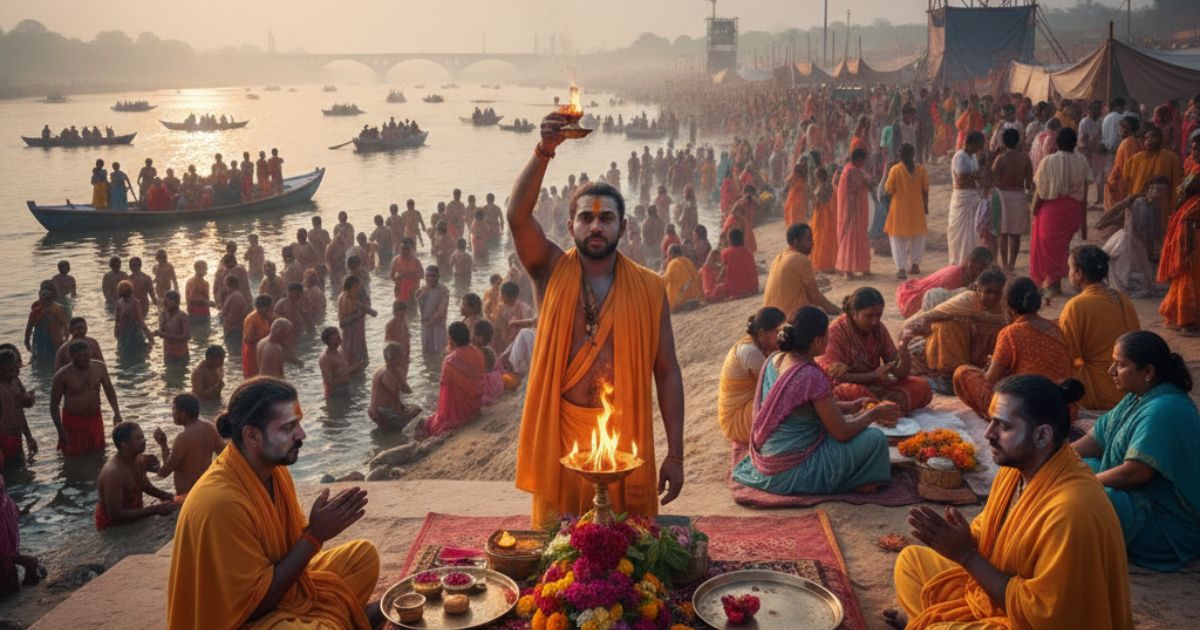
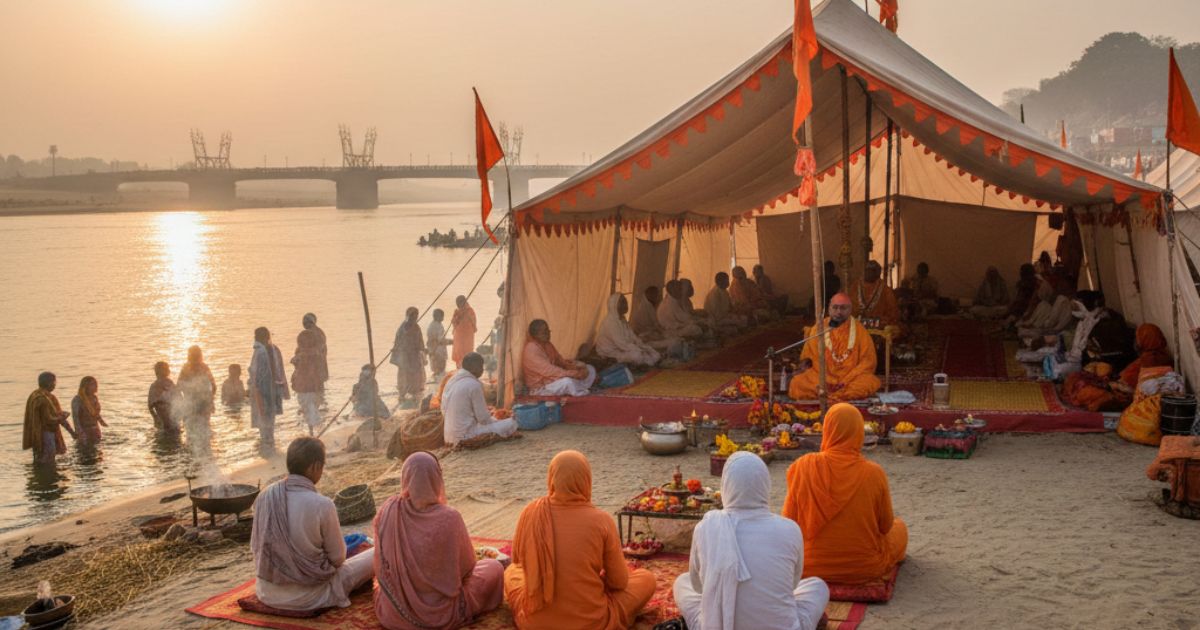
Every year, on the new moon day (Amavasya) during the Hindu month of Magh, millions converge at the Triveni Sangam in Prayagraj. But this isn’t just another pilgrimage date circled on a calendar. The mauni amavasya significance prayagraj is woven into the very fabric of Hindu mythology, threading through epic tales, divine interventions, and cosmic events that shaped the spiritual universe.
What makes this particular new moon so special? Why do ancient amavasya puranic stories consistently highlight this date as unparalleled in spiritual potency? And what secrets lie within the silence rituals amavasya that have transformed countless seekers across millennia?
Let’s journey through the mythological landscapes where gods walked among humans, where rivers descended from heaven, and where a single sacred bath could rewrite the karmic ledger of lifetimes. Welcome to the timeless tales that make Mauni Amavasya the spiritual crown jewel of the entire Magh Mela.
Understanding Amavasya: The Dark Moon Mystery
What Makes Amavasya Special?
Before diving into Mauni Amavasya specifically, we must understand Amavasya itself—the new moon day when the moon is completely dark, invisible in the night sky.
In Vedic cosmology, Amavasya holds profound significance:
Astronomical Reality: The new moon occurs when the moon sits between Earth and Sun, its illuminated side facing away from us. This astronomical alignment creates what ancients called “the darkest night.”
Spiritual Symbolism:
- Ending and Beginning: Amavasya marks the moon cycle’s end and beginning simultaneously
- Darkness and Potential: Like the womb, darkness contains infinite creative potential
- Dissolution and Renewal: Old patterns dissolve, making space for new growth
- Ancestral Connection: The dark moon thins the veil between living and departed
Mythological Context: Amavasya puranic stories describe this day as particularly dear to ancestors (pitrus). The darkness symbolizes the realm of departed souls, making communication and offerings especially effective.
Hindu tradition prescribes specific activities for Amavasya:
- Ancestor rituals (Tarpan and Shraaddh)
- Charity and feeding the poor
- Fasting and spiritual discipline
- Temple visits and prayers
- Meditation and introspection
But among the twelve annual Amavasyas, one stands supreme—Mauni Amavasya during Magh at Prayagraj.
Why “Mauni” – The Silence Connection
The word “Mauni” comes from “Mauna,” meaning silence. But this isn’t ordinary silence—it’s sacred silence, pregnant with spiritual power.
The Etymology: “Muni” means sage or one who practices silence. “Mauni” means pertaining to silence or one who observes silence. Thus, Mauni Amavasya is “the silent new moon” or “the sage’s new moon.”
Why Silence on This Day?
Ancient mythology provides several explanations:
1. Cosmic Silence: According to some amavasya puranic stories, on this day, even the cosmic forces fall silent. The universe pauses in meditation, and humans honor this by maintaining silence.
2. Respect for Departing Souls: Ancestors visiting Earth on this day should not be disturbed by idle chatter. Silence creates the sacred space for their presence.
3. Inner Journey: The darkest external night is perfect for exploring the inner light. Silence turns attention inward, facilitating spiritual breakthroughs.
4. Divine Observation: Gods and sages observe this day in complete silence as their highest tapasya (austerity). Humans follow their example.
The silence rituals amavasya tradition teaches that speech dissipates spiritual energy accumulated through bathing and rituals. Silence conserves and amplifies it.
Ancient Amavasya Puranic Stories
The Churning of the Ocean Legend
One of Hinduism’s most celebrated myths connects directly to the mauni amavasya significance prayagraj:
The Samudra Manthan (Ocean Churning):
When gods (devas) and demons (asuras) churned the cosmic ocean using Mount Mandara as a churning rod and serpent Vasuki as rope, fourteen precious items emerged—including the amrita (nectar of immortality).
As the pot of amrita emerged, a fierce battle ensued. Lord Vishnu, disguised as the enchantress Mohini, grabbed the pot and fled. During a twelve-day divine chase (equivalent to twelve human years), drops of amrita fell at four locations:
- Prayagraj
- Haridwar
- Ujjain
- Nashik
The Mauni Amavasya Connection:
According to one version, the first drop fell at Prayagraj on a Mauni Amavasya during Magh. This explains why bathing on this specific day at this specific location grants immortality—not physical immortality, but liberation from the death-rebirth cycle.
The churning itself was accompanied by mantras and cosmic sounds. But at the moment the amrita drop touched Prayagraj’s waters, the entire universe fell silent in reverence—hence “Mauni” Amavasya. This cosmic silence sanctified the moment, making it eternally auspicious.
Spiritual Significance: The ocean represents consciousness, churning symbolizes spiritual practice, and amrita represents enlightenment. Mauni Amavasya offers direct access to this enlightenment nectar through the sacred bath at Sangam.
Lord Brahma’s Creation Story
Another profound amavasya puranic story connects Brahma, the creator, with Mauni Amavasya:
Brahma’s First Creation:
After creating the universe, Lord Brahma sought the perfect location and timing for his first yajna (fire sacrifice) to stabilize creation. He chose the Triveni Sangam at Prayagraj as the location—where three rivers meet, symbolizing the convergence of creative forces.
But which day? Brahma meditated in silence for cosmic ages, finally determining that Mauni Amavasya during Magh provided the perfect conditions:
- New Moon: Representing new beginnings
- Magh Month: When Sun transits Capricorn, symbolizing structured manifestation
- Silence: Essential for creation to emerge from the unmanifest
The Sacred Yajna:
Brahma performed his yajna in complete silence. No mantras were chanted aloud; all invocations were mental. This silence allowed the creative vibration to permeate all dimensions without distortion.
At the yajna’s completion, the universe stabilized into its current form. The spot where Brahma performed this ritual became the most sacred point on Earth—the Triveni Sangam.
Ritual Implication: This myth establishes that rituals performed at Prayagraj on Mauni Amavasya, especially in silence, carry Brahma’s creative blessing. You’re essentially recreating the original creative act, making new beginnings—spiritual rebirth—powerfully auspicious.
Rishi Muni’s Tapasya at Prayagraj
Numerous amavasya puranic stories describe ancient sages (rishis and munis) who achieved enlightenment specifically on Mauni Amavasya at Prayagraj:
The Seven Saptarishis:
The seven great sages—Vasishta, Vishwamitra, Gautama, Jamadagni, Bharadwaj, Atri, and Kashyapa—gathered at the Sangam on Mauni Amavasya to perform collective meditation.
They observed complete silence for the entire day, bathed at the auspicious muhurat, and entered deep samadhi (meditative absorption). During this meditation, each received direct darshan (vision) of their chosen deity and attained siddhis (spiritual powers).
Sage Bharadwaj’s Ashram:
Sage Bharadwaj maintained his ashram near Prayagraj. According to mythology, he discovered that Mauni Amavasya at the Sangam provided maximum spiritual acceleration. He would observe complete silence for three days—one day before, Mauni Amavasya itself, and one day after.
During these silent retreats, he composed portions of the Vedas, received divine knowledge, and taught disciples through telepathic transmission. His ashram became the model for silence rituals amavasya that continues today.
The Cursed Brahmin’s Liberation:
One story tells of a brahmin cursed to be reborn as a demon due to accidental sin. Desperate, he approached various sages for remedy. Finally, Sage Narada advised him to bathe at Prayagraj on Mauni Amavasya while maintaining absolute silence.
The brahmin followed the advice. The moment he emerged from the sacred waters in complete silence, the curse lifted. He attained liberation, never to be reborn. This story reinforced the mauni amavasya significance prayagraj for karmic cleansing.
The Mythological Trinity: Brahma, Vishnu, and Shiva at Mauni Amavasya
Hindu mythology beautifully weaves the trinity (Trimurti) into Mauni Amavasya celebrations:
Brahma’s Blessing
As discussed, Brahma performed his first yajna here. But the connection goes deeper:
Brahma’s Throne: Mythological texts describe a specific spot at the Sangam as “Brahma-sthan”—Brahma’s seat. On Mauni Amavasya, Brahma is believed to personally sit here, blessing devotees.
Creative Power Grant: Bathing on this day while maintaining silence is said to earn Brahma’s special blessing—the power of conscious creation. Whatever you deeply desire while emerging from the waters, Brahma helps manifest.
The Four Faces: Brahma’s four faces represent the four Vedas. On Mauni Amavasya, all four aspects of sacred knowledge become accessible simultaneously to sincere seekers.
Vishnu’s Divine Presence
Lord Vishnu, the preserver, has profound connections to the mauni amavasya significance prayagraj:
Vishnu’s Navel: Some texts claim Prayagraj Sangam represents Vishnu’s navel—the point from which Brahma emerged on a lotus to create the universe. Bathing here connects devotees directly to the source of all existence.
Mohini Avatar: As Mohini carrying the amrita pot, Vishnu blessed this location. On Mauni Amavasya, Vishnu is believed to recreate that blessing, granting spiritual amrita to sincere bathers.
Vaikuntha Gateway: Mauni Amavasya at Prayagraj is described as opening a temporary gateway to Vaikuntha (Vishnu’s heavenly abode). Those who bathe with pure devotion glimpse higher realms.
Preservation of Dharma: Vishnu’s preserving aspect ensures that dharmic practices on Mauni Amavasya receive maximum protection and benefit.
Shiva’s Cosmic Dance
Lord Shiva, the transformer, adds the final dimension:
Shiva’s Meditation: According to some amavasya puranic stories, Shiva meditates in complete silence at Prayagraj on Mauni Amavasya. His meditation generates such powerful vibrations that simply being present at the Sangam grants meditative depth.
Destruction of Karma: Shiva’s transformative power is most accessible on this day. Past karmas that would normally take lifetimes to burn can be dissolved in moments through sincere bathing and silence.
The Third Eye Blessing: Devotees maintaining perfect silence while bathing may receive Shiva’s third eye blessing—awakening of intuitive wisdom and spiritual insight.
Tandava Echoes: Some mystics claim that on Mauni Amavasya, the cosmic echoes of Shiva’s Tandava (cosmic dance) can be perceived at the Sangam, accelerating spiritual evolution for those attuned.
Thus, the trinity converges at Prayagraj on Mauni Amavasya, offering complete spiritual support—creation (Brahma), preservation (Vishnu), and transformation (Shiva).
Silence Rituals Amavasya: The Power of Mauna
Why Sages Observed Silence
The silence rituals amavasya aren’t arbitrary—they’re based on profound spiritual science:
Speech and Energy Dissipation: Ancient rishis discovered that speech disperses prana (life force). The average person loses 30-40% of their accumulated spiritual energy through unnecessary talking.
On Mauni Amavasya, when cosmic energy is at its peak and sacred bathing multiplies benefits exponentially, maintaining silence ensures you retain and integrate all the blessings rather than dissipating them through speech.
Mind Stilling: Speech originates in the thinking mind. When you observe silence, thoughts naturally reduce. Reduced mental chatter allows deeper states of consciousness—exactly what’s needed to fully absorb the Sangam’s spiritual vibrations.
Respect for the Sacred: Just as you wouldn’t talk loudly in a temple’s inner sanctum, silence at the Sangam on this supremely holy day demonstrates respect for the sacred occasion.
Ancestor Communication: Mythology suggests that ancestors communicate through subtle means—intuition, dreams, feelings. Human chatter creates “noise” that blocks these subtle signals. Silence opens the channel for ancestral blessings.
The Spiritual Science Behind Mauna
Modern spiritual teachers and ancient texts agree on several mechanisms:
Energy Conservation: Think of spiritual energy like water in a pot. Speech creates holes through which energy leaks. Silence plugs these holes, allowing your pot to fill completely during the powerful Mauni Amavasya bathing.
Consciousness Shift: Normal consciousness operates at the level of words and concepts. Silence shifts consciousness to pre-verbal, intuitive levels—where divine communication occurs.
Karmic Pause: Speech often generates karma—praising, criticizing, gossiping, lying. Silence creates a karmic pause, preventing new negative karma while old karma dissolves in the sacred waters.
Enhanced Receptivity: The mauni amavasya significance prayagraj includes maximum divine grace availability. But grace can only be received by prepared vessels. Silence prepares the consciousness-vessel for receiving.
Practical Implementation:
Traditional silence rituals amavasya include:
- Beginning silence from previous midnight
- Maintaining absolute verbal silence during bath
- Extending silence through the entire day
- Using gestures only for absolute necessities
- Avoiding even mental chatter (advanced practice)
- Breaking silence only after sunset with sacred utterances
Many devotees report that the hardest part isn’t external silence but inner silence—stopping the mental commentary. Yet those who succeed describe profound experiences of peace, clarity, and divine presence.
Ganga’s Descent and Mauni Amavasya Connection
The story of Ganga’s descent from heaven intertwines beautifully with Mauni Amavasya mythology:
King Bhagirath’s Penance:
King Bhagirath performed intense tapasya (austerity) to bring Ganga from heaven to earth, seeking to purify his 60,000 ancestors who had been cursed.
When Ganga finally agreed to descend, Lord Shiva caught her in his matted locks to prevent her force from destroying the earth. From Shiva’s hair, Ganga flowed in seven streams, one reaching Prayagraj.
The Mauni Amavasya Moment:
According to some versions, Ganga first touched the Prayagraj Sangam on a Mauni Amavasya. The moment was so sacred that the entire universe observed silence—even the cosmic sounds (nada) paused in reverence.
This event established the principle that Ganga’s purifying power reaches its absolute peak at Prayagraj on Mauni Amavasya. The very day she first blessed the earth, she continues to bestow maximum grace.
The Eternal Promise:
Ganga promised that anyone bathing at the Sangam on Mauni Amavasya while observing silence would receive the same benefits Bhagirath’s ancestors received—complete liberation from karmic bondage.
This promise, embedded in amavasya puranic stories, drives millions to Prayagraj annually despite the harsh winter cold and challenging conditions.
Pitru Paksha and Ancestor Mythology at Amavasya
King Bhagirath’s Penance
We touched on this earlier, but the full story deepens the mauni amavasya significance prayagraj:
The Curse: Bhagirath’s 60,000 ancestors were reduced to ashes by Sage Kapila’s glance when they disturbed his meditation. Their souls couldn’t attain peace or proceed to higher realms without proper ritual purification.
The Solution: Only Ganga’s waters could purify their ashes and liberate their souls. Bhagirath’s generations-long penance finally succeeded in bringing Ganga to earth.
The Prayagraj Connection: When Ganga’s waters reached Prayagraj, Bhagirath brought his ancestors’ ashes there. On Mauni Amavasya, he performed Pitru Tarpan (ancestor ritual) at the Sangam in complete silence.
The moment was cosmically significant. Not just his 60,000 ancestors, but countless other departed souls waiting in various realms for liberation received freedom simultaneously.
The Precedent: This established Mauni Amavasya at Prayagraj as the supreme occasion for Pitru Tarpan. Families carrying ashes of deceased relatives consider it most auspicious to immerse them on this day.
The Karmic Liberation Promise
Multiple amavasya puranic stories promise specific karmic benefits:
Instant Pitra Dosh Removal: Pitra Dosh (ancestral affliction in horoscope) is believed to dissolve for those who perform proper Pitru Tarpan at Sangam on Mauni Amavasya.
Seven Generations: Texts claim that bathing here on this day liberates seven generations of ancestors—three before you, three after you, plus yourself.
Unfulfilled Desires of Departed: Ancestors with unfulfilled desires that keep them bound to subtle realms find release through their descendants’ rituals on Mauni Amavasya.
Curse Nullification: Family curses, ancestral anger, and inherited karmic patterns can be neutralized through sincere participation in this sacred occasion.
This is why Mauni Amavasya sees the highest concentration of Pitru Tarpan rituals—families from across India and abroad gather to fulfill their ancestral obligations.
Mythological Bathing Timings and Muhurat
Ancient texts provide precise guidance on bathing times, rooted in mythology:
Brahma Muhurta (Pre-Dawn): The 90-minute window before sunrise, when Brahma performed his original yajna. Bathing during this time connects you with creation’s original blessing.
Sunrise Moment: The exact moment of sunrise on Mauni Amavasya is considered supremely auspicious—when darkness transforms to light, symbolizing ignorance transforming to knowledge.
Sangam Snan Muhurat: Astrologically calculated timing when planetary positions optimize spiritual benefits. This changes annually based on lunar calendar and celestial mechanics.
The Three-Dip Tradition: Mythology prescribes three complete immersions:
- First dip for physical purification
- Second dip for mental cleansing
- Third dip for spiritual elevation
Each dip should be accompanied by specific mantras and silent intentions.
Evening Aarti Time: While morning bathing holds primary importance, participating in the evening Ganga Aarti on Mauni Amavasya concludes the day’s spiritual practices, sealing the blessings received.
The mauni amavasya significance prayagraj multiplies during these precisely calculated muhurats, which is why AstroInsight.guru’s astrological guidance proves invaluable for pilgrims seeking to maximize their spiritual benefits.
Sacred Legends of Transformation at Prayagraj
The Cursed Sage’s Liberation
One beautiful story illustrates the transformative power:
The Background: A renowned sage, despite his spiritual knowledge, harbored subtle pride. This pride manifested as a curse—he would be reborn as a bird for one lifetime to learn humility.
The Desperation: As a bird, he retained memory of his former spiritual attainments. The frustration of being trapped in an animal body with enlightened consciousness was unbearable.
The Divine Guidance: In a dream, Sage Narada appeared, instructing him to fly to Prayagraj on Mauni Amavasya and immerse himself in the Sangam waters.
The Miracle: The bird arrived on the sacred day. As millions of humans bathed, the small bird dove into the sacred confluence. In that moment, the curse broke. The bird died, and the sage was instantly reborn in a brahmin family with full spiritual capacities restored.
The Teaching: This story demonstrates that the mauni amavasya significance prayagraj extends even to non-human beings—the spiritual law operates impersonally, based on sincere participation regardless of form.
The Demon Who Found Moksha
Another powerful tale:
The Demon’s Dilemma: A demon named Kalanemi, despite his demonic nature, possessed an unusual quality—spiritual curiosity. He wondered if demons could ever attain liberation or if they were eternally condemned.
The Risky Quest: On overhearing sages discussing Mauni Amavasya at Prayagraj, Kalanemi decided to test it. Disguising himself as a human, he traveled to the Sangam.
The Transformation: Following all protocols—including silence—Kalanemi bathed at the prescribed muhurat. As the sacred waters touched his body, his demonic nature burned away like dross in fire.
The Liberation: Emerging from the waters, Kalanemi was no longer a demon. His consciousness had transformed completely. He spent the rest of that life in meditation at the Sangam, eventually attaining moksha.
The Universal Message: These amavasya puranic stories emphasize that the grace available at Prayagraj on Mauni Amavasya transcends past karma, species, and even cosmic classifications. Sincere participation opens transformation for all.
Devas Descending: When Gods Visit Earth
One of the most enchanting aspects of mauni amavasya significance prayagraj is the belief that gods themselves descend:
The Celestial Bathing: Mythological texts describe that on Mauni Amavasya, devas from various heavenly realms take subtle forms and bathe at the Sangam. They come to renew their divine energies and pay respects to the sacred confluence.
The Gandharvas and Apsaras: Celestial musicians and dancers accompany the gods, creating sublime vibrations through their presence. Spiritually sensitive individuals sometimes perceive celestial music or fragrance during the bathing hours.
Rishis and Siddhas: Ancient sages who attained immortality through yogic practices are believed to gather at Prayagraj on this day, blessing sincere seekers through their presence.
The Divine Witness: Multiple deities—Brahma, Vishnu, Shiva, Ganga, Yamuna, Saraswati—are believed to personally witness the sacred bathing, making each devotee’s participation a cosmic event.
Implications for Devotees: This mythology suggests that bathing on Mauni Amavasya isn’t a solitary act—you’re joining a cosmic congregation spanning dimensions. Your individual bath becomes part of an immense spiritual festival occurring simultaneously in multiple realms.
The Kumbh Connection: Mauni Amavasya as the Crown Jewel
While Kumbh Mela spans weeks with multiple auspicious bathing dates, Mauni Amavasya consistently emerges as the most important:
The Sacred Bathing Dates: During Kumbh Mela at Prayagraj, several dates are designated for sacred bathing:
- Makar Sankranti (Sun’s entry into Capricorn)
- Mauni Amavasya (The dark moon)
- Basant Panchami (Spring festival)
- Maghi Purnima (Full moon)
- Maha Shivratri (Shiva’s great night)
Why Mauni Amavasya Leads: Among all these, Mauni Amavasya draws the largest crowds and is considered most auspicious because:
- It combines the new moon’s power with Magh month’s sacredness
- The silence tradition amplifies spiritual benefits
- Mythological events converge on this date
- Ancestor rituals are most effective now
- Divine presence is believed maximum
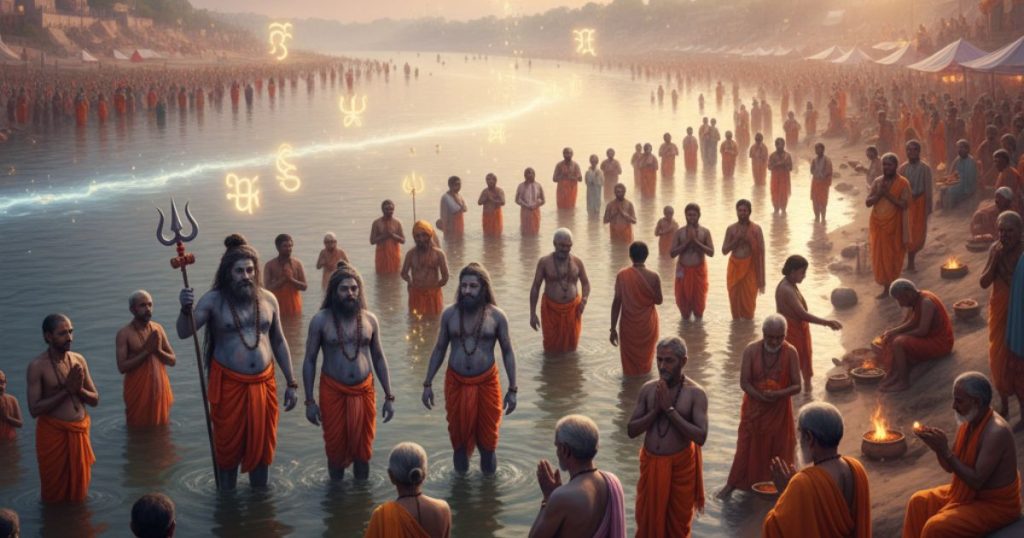
The Royal Bath: Traditionally, Naga Sadhus (ascetic warriors) take their ceremonial bath early on Mauni Amavasya, followed by other akharas (ascetic orders), and then the general public. This procession recreates ancient hierarchies and adds to the day’s sacred theater.
Historical Records: The largest gathering in human history—120 million people—occurred during the 2019 Kumbh Mela at Prayagraj, with Mauni Amavasya seeing the peak crowds.
This consistently demonstrates that among all the sacred dates, the mauni amavasya significance prayagraj remains supreme in both tradition and practice.
Modern Relevance of Ancient Mythology
Why do these ancient stories still matter in our scientific, modern age?
Psychological Architecture: Myths aren’t literal histories—they’re psychological and spiritual architecture. The story of Ganga’s descent represents the descent of divine grace into human consciousness. Bhagirath’s penance symbolizes persistent spiritual effort.
Collective Unconscious: Carl Jung’s concept of collective unconscious suggests that archetypal stories reside in humanity’s shared psyche. The amavasya puranic stories tap into universal themes—purification, transformation, liberation—that resonate across cultures and eras.
Experiential Validation: Millions who participate in Mauni Amavasya at Prayagraj report experiences that validate the mythology—profound peace, emotional healing, spiritual insights, life transformations. When myth produces consistent experiential results, it transcends belief to become experiential truth.
Cultural Continuity: These myths provide continuity with ancestors, connecting modern practitioners to an unbroken spiritual lineage spanning millennia. In our fragmented modern world, such continuity offers psychological grounding and spiritual identity.
Metaphorical Wisdom: The silence rituals amavasya teach that sometimes restraint (silence) is more powerful than action (speech). Mauni Amavasya’s mythology contains dozens of such wisdom principles encoded in narrative form.
Sacred Calendar: Myths create sacred time—periods when ordinary life pauses and transcendent possibilities emerge. Mauni Amavasya transforms one day from ordinary to extraordinary, giving even skeptics permission to seek the sacred.
Thus, ancient mythology remains vibrantly alive, not as historical curiosity but as living wisdom that continues guiding spiritual seekers.
How AstroInsight.guru Connects You to Sacred Traditions
Understanding the mythological importance is one thing; experiencing it authentically is another. AstroInsights.guru bridges this gap:
Mythological Context Consultations: Our experts explain relevant myths based on your personal astrological chart, helping you understand which stories and deities most relate to your spiritual journey.
Optimal Timing Calculations: We calculate your personalized muhurat for Mauni Amavasya bathing based on:
- Your natal chart
- Current planetary transits
- Specific spiritual goals
- Mythological correspondences
Ritual Guidance: Understanding which rituals align with which mythological traditions ensures authentic participation. We guide you through:
- Appropriate mantras based on your chosen deity
- Proper sequence matching traditional accounts
- Silence protocols adapted to your capacity
- Pitru Tarpan procedures for ancestor rituals
Pandit Booking Services: Our verified pandits specialize in conducting rituals according to authentic Puranic guidelines, not commercialized shortcuts. They understand the amavasya puranic stories and incorporate that wisdom into ceremonies.
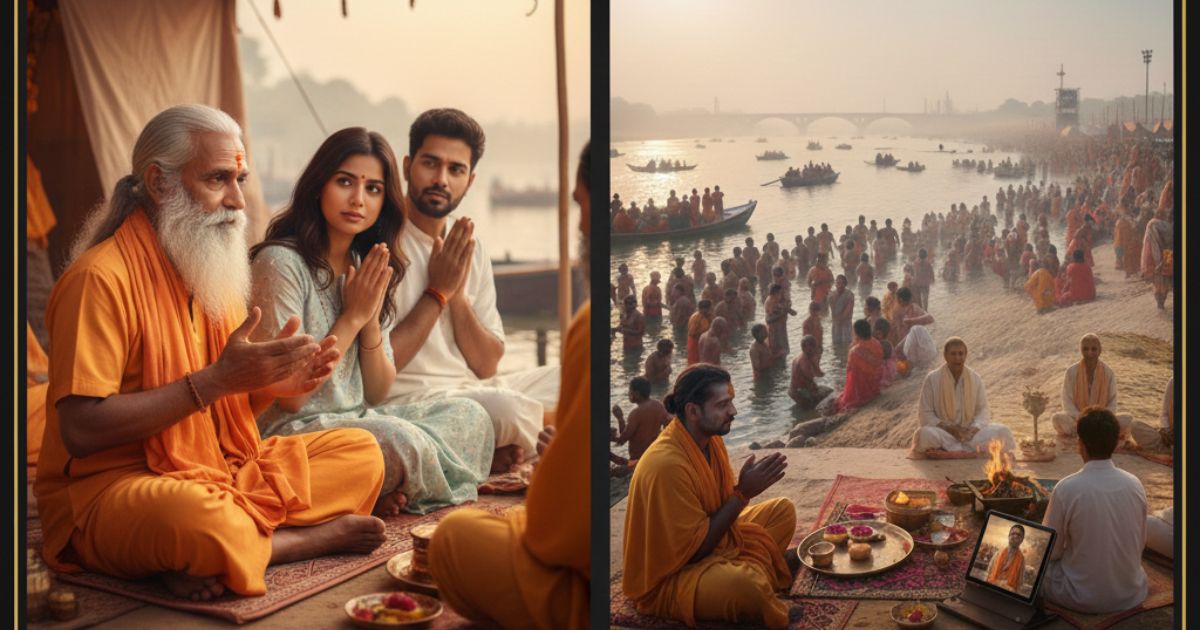
Virtual Participation: Cannot physically attend? We arrange proxy rituals performed by experienced pandits on your behalf, with full video documentation. Your sankalp (intention) travels through the pandit to the sacred waters.
Post-Experience Integration: After your Mauni Amavasya experience, our consultations help you:
- Interpret experiences through mythological lens
- Maintain spiritual momentum
- Address challenges or confusion
- Plan ongoing spiritual practices
Comprehensive Support: From pre-pilgrimage preparation through post-return integration, AstroInsights.guru ensures your connection to these sacred traditions is authentic, meaningful, and transformative.
Connect with AstroInsight.guru:
- 🌐 Website: astroinsights.guru
- 📞 Phone: +916306407641
- 📧 Email: astroinsights.guru@gmail.com
Conclusion
The mauni amavasya significance prayagraj isn’t merely a religious belief—it’s a living mythology that continues shaping millions of lives. From the cosmic ocean churning to Ganga’s heavenly descent, from Brahma’s first yajna to countless transformation stories, each myth adds another layer of meaning to this sacred day.
These amavasya puranic stories aren’t asking for blind faith. They’re inviting experiential exploration. They suggest: “Try the sacred bath in silence on this specific day at this specific place, and discover for yourself what our ancestors discovered.”
The silence rituals amavasya carry profound wisdom—that sometimes the most powerful action is non-action, that restraint can be more transformative than effort, that emptiness allows divine fullness to enter.
Whether you interpret these myths literally or metaphorically, historically or psychologically, their power remains undeniable. They’ve drawn countless generations to Prayagraj’s sacred waters, each seeking what the stories promise—purification, transformation, and liberation.
As Mauni Amavasya approaches each year, the ancient call sounds again: Come to where rivers meet, where heaven touches earth, where time bends toward eternity. Come in silence, come with reverence, come with open hearts—and discover what cannot be spoken, only experienced.
In our noisy, hyperconnected modern world, perhaps we need Mauni Amavasya more than ever. Not just as a religious observance, but as a radical act of reclaiming silence, reconnecting with the sacred, and remembering that beneath all the mythology lies a simple, profound truth: some spaces, some moments, some experiences transcend words.
The sacred rivers still flow. The Sangam still awaits. The cosmic invitation issued millennia ago remains open today. The only question is: will you answer the call?
May the mythological wisdom of Mauni Amavasya illuminate your spiritual path, and may the sacred waters of Prayagraj grant you the transformation your soul seeks.
FAQs About Mauni Amavasya Significance Prayagraj
1. Why is Mauni Amavasya specifically more sacred than other Amavasyas throughout the year?
The mauni amavasya significance prayagraj stems from the convergence of multiple mythological and astronomical factors. While all twelve annual Amavasyas carry spiritual importance, Mauni Amavasya during Magh month at Prayagraj is unique because: Mythological Convergence: According to amavasya puranic stories, this is when Brahma performed his first yajna, when the amrita drops fell at the Sangam, when Ganga first touched Prayagraj, and when deities descend to bathe. These cosmic events don’t occur on other Amavasyas. Astronomical Positioning: The Sun’s transit through Capricorn during Magh creates specific energetic conditions that amplify spiritual practices. Geographical Sanctity: Prayagraj’s Triveni Sangam (three-river confluence) exists nowhere else, making the location unique. Accumulated Merit: Millions of enlightened beings and sincere devotees have practiced here for thousands of years, creating what some call a “morphic field” of accumulated spiritual energy. Silence Tradition: The silence rituals amavasya specifically associated with this date create optimal conditions for absorbing spiritual benefits. Think of it as multiple rare factors aligning simultaneously—like a spiritual “super moon” that occurs just once annually at one specific location.
2. What happens if I cannot maintain complete silence during Mauni Amavasya—does that invalidate the spiritual benefits?
No, it doesn’t invalidate benefits, though silence does enhance them. The silence rituals amavasya represent an ideal, not an absolute requirement. Here’s the realistic perspective: Levels of Silence: Complete verbal silence (not speaking at all), selective silence (speaking only when absolutely necessary), internal silence (quieting mental chatter even while speaking), and intentional silence (designated silent periods). Even partial silence generates benefits. Accidental Speech: If you accidentally speak or must speak for emergencies, the overall spiritual benefit isn’t nullified. Your sincere intention matters more than mechanical perfection. Personal Capacity: Not everyone can maintain day-long silence—those with children, health issues, or other circumstances can observe modified silence. Modern Adaptations: Some devotees maintain silence during the actual bathing and for a few hours after, then gradually resume speech. The Spirit Over Letter: Ancient rishis understood that spiritual laws emphasize spirit over rigid letter. The silence tradition aims to conserve energy and deepen focus—if you achieve that through modified silence, you’ve honored the tradition’s essence. AstroInsight.guru can help design personalized silence protocols suited to your circumstances and capacity.
3. Are the amavasya puranic stories literal historical events or symbolic spiritual teachings?
This question touches the heart of how we understand sacred texts. The answer is: Both, and more. Multiple Levels of Truth: Vedic tradition recognizes different levels of truth—literal (historical), symbolic (psychological/spiritual), and experiential (personal realization). These aren’t contradictory but complementary layers of meaning. Historical Possibility: Archaeological evidence supports some aspects—the existence of ancient Saraswati river, the astronomical knowledge behind Kumbh calculations, and continuous habitation at Prayagraj for thousands of years. Some events may have historical kernels. Psychological Archetypes: Stories like Bhagirath’s penance represent universal human experiences—perseverance, ancestral obligation, karmic healing. They’re psychologically true regardless of historical factuality. Spiritual Technology: These myths function as spiritual technologies—when you engage them with devotion and proper practice, they produce consistent experiential results. This pragmatic truth transcends the literal-symbolic debate. Cultural Memory: Stories preserve collective wisdom in memorable form, ensuring transmission across generations. Personal Discovery: Rather than debating historical accuracy, the tradition invites: experience the practices these stories prescribe and discover their truth personally. The mauni amavasya significance prayagraj proves itself through lived experience more than historical verification.
4. How do the mythological benefits of Mauni Amavasya work from an astrological perspective?
Astrology provides the technical framework underlying the mythology: Lunar Cycle Completion: Amavasya marks the complete lunar cycle’s end—energetically, this represents conclusion and renewal, perfect for releasing old karma (endings) and setting spiritual intentions (new beginnings). Sun-Moon Conjunction: On Amavasya, Sun and Moon conjunct in the same zodiac sign. This alignment creates a powerful unified energy field, especially potent when occurring during Sun’s transit through Capricorn (Magh month). Capricorn’s Significance: Capricorn represents discipline, structure, karma, and time itself (ruled by Saturn). The Sun transiting Capricorn during Mauni Amavasya creates optimal conditions for karmic cleansing and ancestral work. Nodal Points: Astrologically, Prayagraj is considered a geographical power point where earth’s energy vortexes concentrate—like an acupuncture point on the planet’s body. Planetary Witness: During Mauni Amavasya, specific planetary configurations allow maximum divine grace flow. The “gods descending” mythologically translates astrologically to beneficial planetary aspects. Personal Chart Activation: Your individual birth chart determines how Mauni Amavasya energies affect you personally. AstroInsight.guru’s astrologers calculate this, showing which houses and planets in your chart receive maximum activation, allowing targeted spiritual work addressing your specific karmic patterns and spiritual goals.
5. Can women observe Mauni Amavasya and take the sacred bath during menstruation, or do traditional restrictions apply?
This question involves balancing tradition with modern understanding: Traditional Restrictions: Orthodox traditions suggest women avoid temple entries and sacred bathing during menstruation, viewing it as a natural period of rest requiring withdrawal from intense spiritual activities. Scriptural Ambiguity: Ancient texts don’t uniformly agree. Some emphasize purity codes, while others focus on devotional sincerity regardless of physical states. The amavasya puranic stories themselves rarely address this directly. Modern Spiritual Teachers: Many contemporary gurus and teachers encourage women to follow their personal guidance—if they feel physically and spiritually comfortable bathing, the divine doesn’t reject sincere devotion based on natural biological processes. Practical Considerations: Mauni Amavasya often falls in harsh winter conditions with cold water. Menstruating women might prefer modified observance for comfort and health rather than religious restriction. Modified Participation: Women can observe silence, perform prayers from the banks without immersion, engage in charitable acts, and participate in spiritual aspects while honoring their body’s needs. Personal Conviction: Hindu tradition ultimately recognizes individual dharma (personal righteousness). What feels right based on your tradition, teacher, and inner guidance should guide your choice. AstroInsight.guru’s Approach: We provide personalized guidance respecting both traditional wisdom and individual circumstances, helping women navigate these questions according to their specific situation, beliefs, and astrological chart. The mauni amavasya significance prayagraj includes blessings for all sincere seekers—divine grace doesn’t discriminate based on circumstances beyond one’s control.