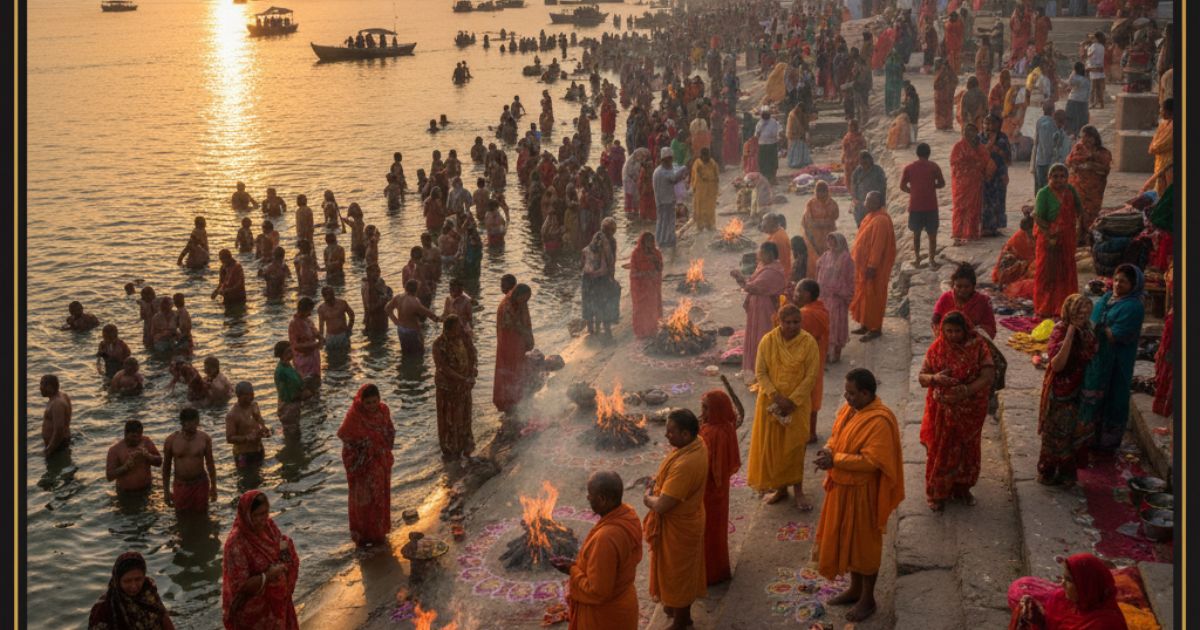
Explore Makar Sankranti 2026 in Prayagraj with complete details on date, puja vidhi, Snan-Daan muhurat, holy bath significance, and traditional rituals for devotees.
Are you ready to experience one of Hinduism’s most auspicious festivals in 2026? Makar Sankranti 2026 marks the Sun’s transition into Capricorn (Makar Rashi), signaling the end of winter and the beginning of longer, warmer days. But this isn’t just any ordinary festival—when celebrated at Prayagraj’s sacred Triveni Sangam during Magh Mela, its spiritual power multiplies exponentially. Imagine taking your holy bath at the exact auspicious moment when millions of devotees gather, cosmic energies align perfectly, and the confluence of three sacred rivers amplifies your prayers. Let’s explore everything you need to know about Makar Sankranti date 2026, complete puja procedures, perfect bathing times, and how to maximize this golden spiritual opportunity.
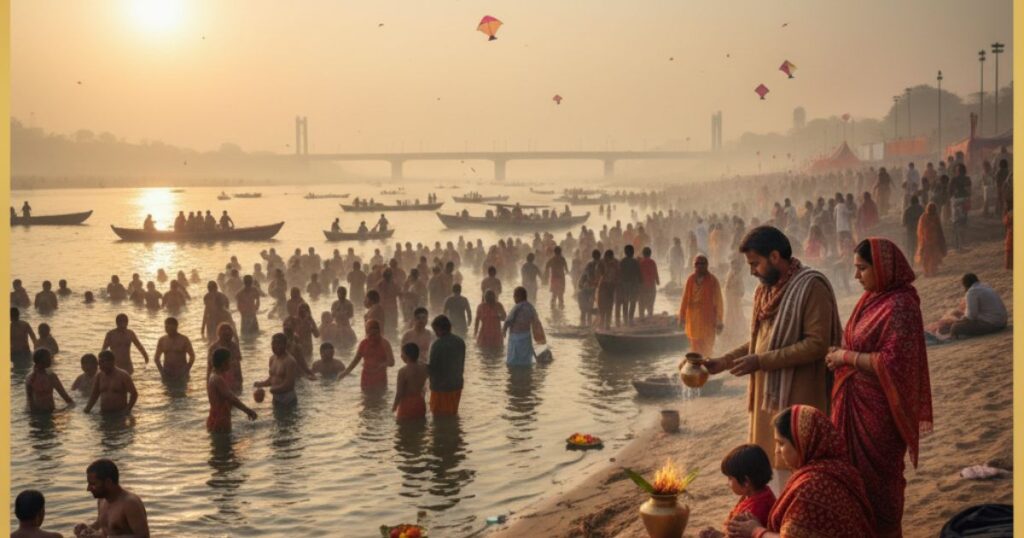
Understanding the Significance of Makar Sankranti 2026
Astronomical Importance of Sun’s Transition
Unlike most Hindu festivals calculated by the lunar calendar, Makar Sankranti follows the solar calendar, making it one of the few Hindu festivals that falls on approximately the same date every year—typically January 14th or 15th. In 2026, this sacred day marks the precise moment when Surya (the Sun) enters Makar Rashi (Capricorn zodiac).
This astronomical event holds profound significance. The Sun begins its northward journey (Uttarayan), moving away from the Southern Hemisphere toward the Northern Hemisphere. Ancient Vedic wisdom recognized this shift as symbolizing the movement from darkness toward light, ignorance toward knowledge, and material attachment toward spiritual liberation.
Think of it as nature’s New Year—a cosmic reset button where solar energies shift, daylight begins increasing, and spiritual practices performed during this time receive enhanced potency.
Spiritual Meaning in Hindu Tradition
In Hindu cosmology, Uttarayan (the six-month period when the Sun travels northward) is considered highly auspicious. The Bhagavad Gita specifically mentions that souls departing during Uttarayan attain liberation more easily. This is why Bhishma Pitamah from the Mahabharata, lying on his bed of arrows, waited for Uttarayan before leaving his body.
Makar Sankranti 2026 represents the gateway to this blessed period. It’s believed that gods awaken from their cosmic sleep during this time, making it ideal for spiritual practices, sacred bathing, charitable donations, and beginning new ventures. The festival essentially celebrates the victory of light over darkness, both externally in nature and internally within consciousness.
Makar Sankranti Date 2026 and Auspicious Timings
Exact Date and Sankranti Moment
Makar Sankranti date 2026 falls on Wednesday, January 14, 2026. However, the exact moment of Sankranti—when the Sun actually transitions into Capricorn—determines the most auspicious timing for rituals.
Based on astronomical calculations, the Sankranti Moment (when the Sun enters Makar Rashi) is expected to occur in the early morning hours of January 14, 2026. The precise timing varies slightly based on geographical location, but for Prayagraj, the Sankranti moment is anticipated around 2:30 AM to 3:00 AM (tentative—verify closer to the date).
Why does this exact moment matter? Because rituals, donations, and sacred baths performed as close as possible to the Sankranti moment carry maximum spiritual potency. It’s like catching a wave at its peak—timing transforms the experience entirely.
Punya Kaal and Maha Punya Kaal Timings
Hindu tradition recognizes specific auspicious periods surrounding the Sankranti moment:
Punya Kaal (Sacred Period):
- Begins: Approximately 7:00 AM on January 14, 2026
- Ends: Approximately 5:30 PM on January 14, 2026
- Duration: Approximately 10.5 hours
During Punya Kaal, all spiritual activities—bathing, donations, prayers, and rituals—yield enhanced results.
Maha Punya Kaal (Highly Sacred Period):
- Begins: Approximately 7:00 AM on January 14, 2026
- Ends: Approximately 9:00 AM on January 14, 2026
- Duration: Approximately 2 hours
Maha Punya Kaal represents the most powerful window. If you can perform only one sacred bath or major donation, schedule it during these precious hours for maximum spiritual benefit.
Note: These timings are approximate based on typical calculations. For precise muhurat specific to your location and birth chart, consult a qualified astrologer closer to the date.
Why Prayagraj Makar Sankranti is Extra Special
Confluence of Magh Mela and Makar Sankranti
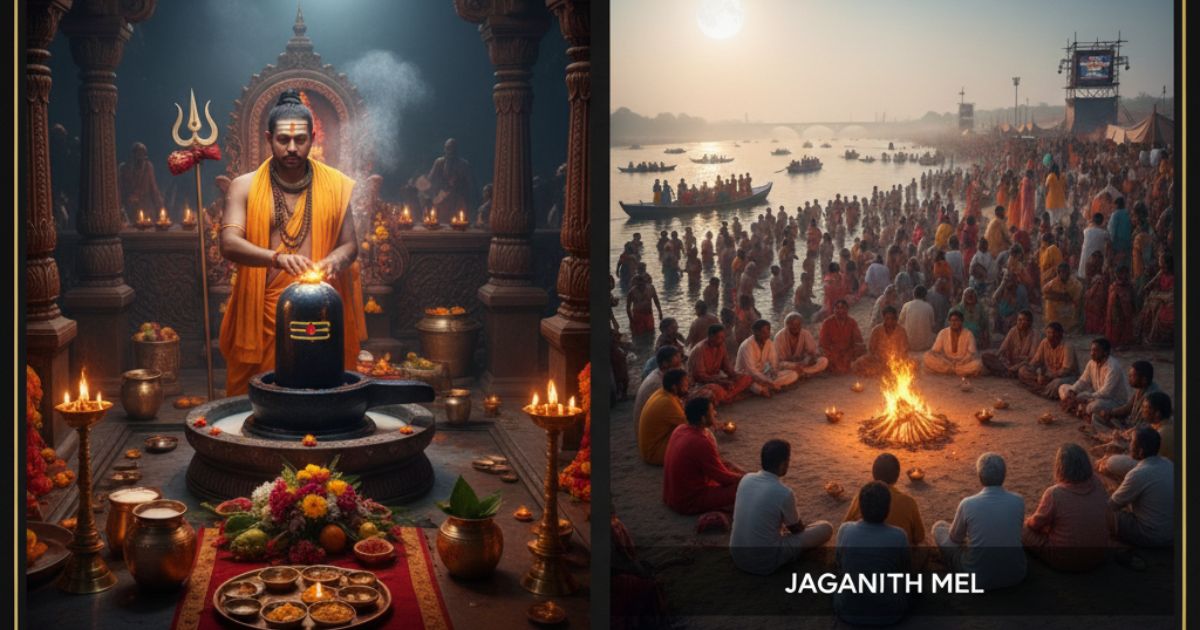
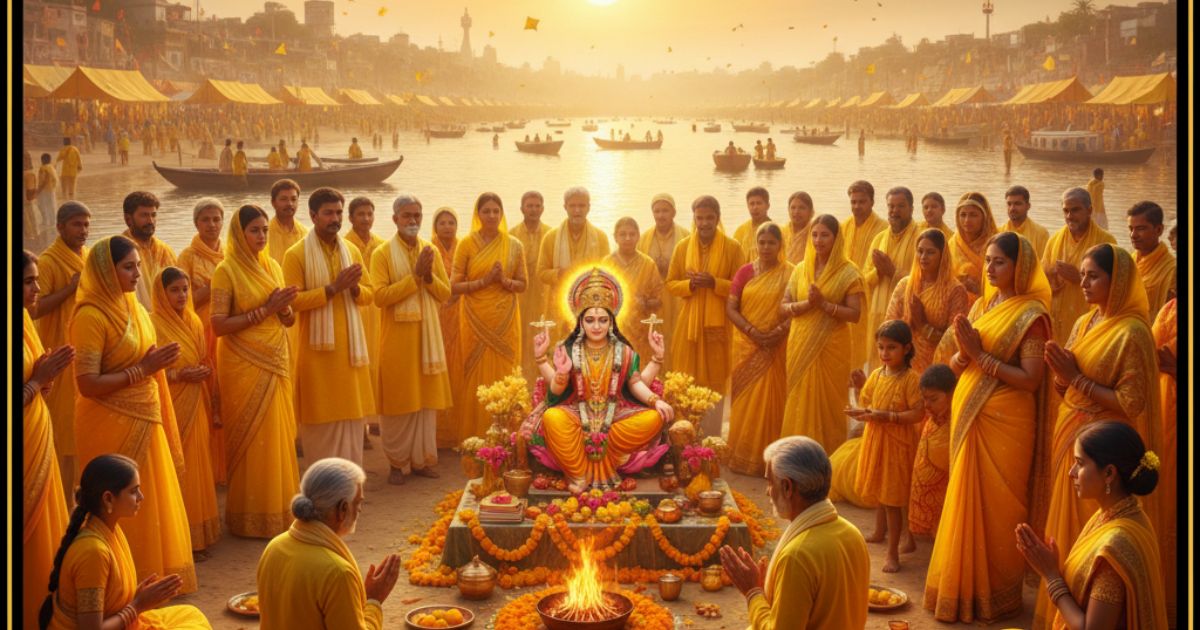
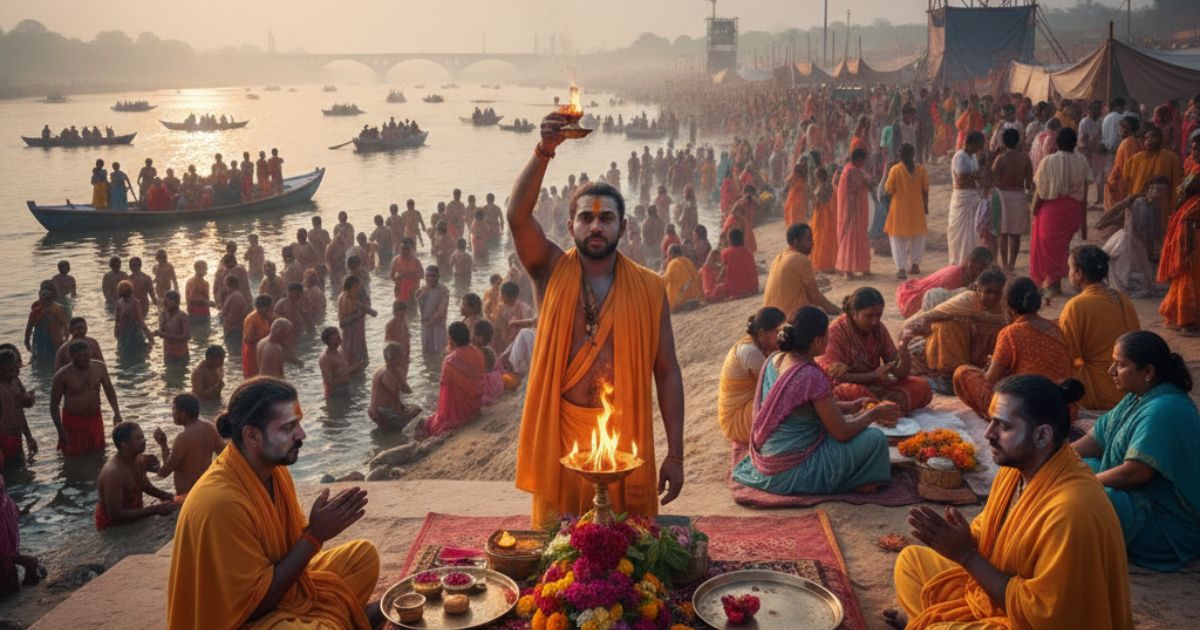
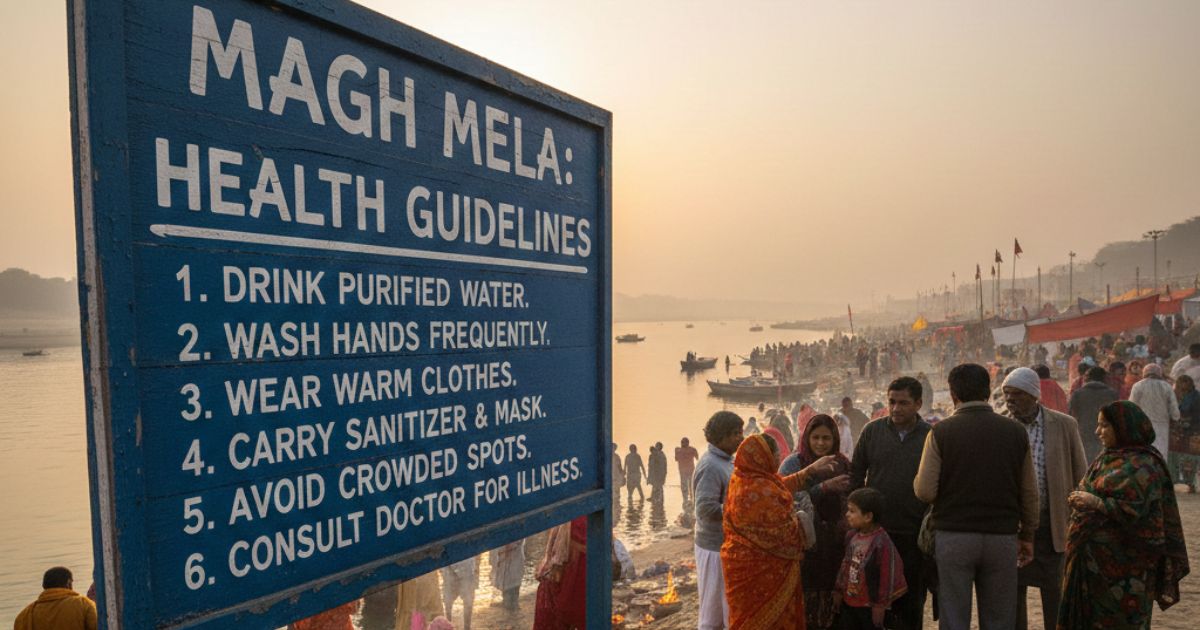
Prayagraj Makar Sankranti holds unique significance because it occurs during the month-long Magh Mela. When this powerful festival coincides with the sacred gathering at Triveni Sangam, the spiritual energy becomes extraordinary.
Imagine a perfect storm of blessings: the inherent power of the sacred confluence, the cosmic shift of Makar Sankranti, millions of devotees’ collective prayers, and the month-long spiritual charge accumulated during Magh Mela—all converging on one day. This is why astrologers and spiritual teachers consistently rank Makar Sankranti at Prayagraj among the most auspicious opportunities available in the Hindu calendar.
It’s said that one sacred bath at Sangam on Makar Sankranti equals thousands of baths at other times and places. While we cannot verify such mystical mathematics, countless pilgrims report profound experiences and life-changing shifts following their Sangam Snan 2026 on this sacred day.
Significance of Sangam Snan 2026
The Sangam Snan 2026 on Makar Sankranti carries multilayered significance:
Physical Purification: Bathing in the holy waters cleanses physical impurities and refreshes the body.
Energetic Cleansing: The flowing rivers carry away stagnant energies, emotional blockages, and subtle impurities accumulated over time.
Karmic Purification: According to tradition, sincere bathing at Sangam during Makar Sankranti helps dissolve karmic debts and negative patterns from past actions.
Spiritual Awakening: The combined energy of place, time, and collective devotion can trigger spontaneous spiritual insights and consciousness shifts.
Many pilgrims describe feeling “reborn” after their Makar Sankranti bath at Sangam—lighter, clearer, and somehow different at a fundamental level.
Complete Makar Sankranti Puja Vidhi
Pre-Puja Preparations
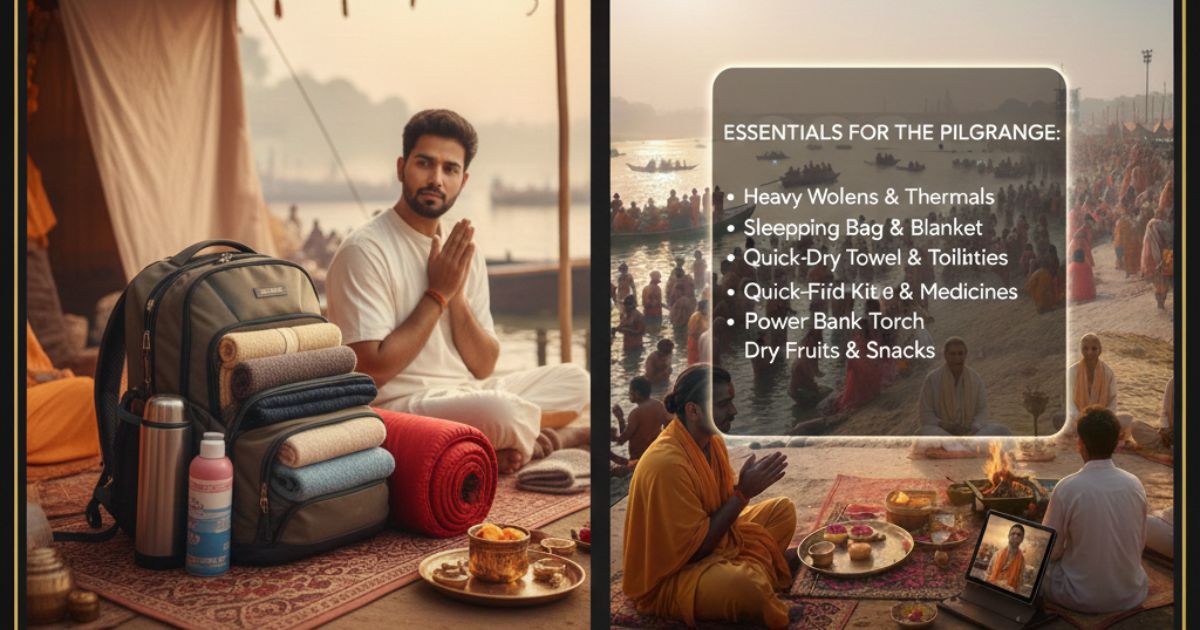
Before performing the Makar Sankranti Puja Vidhi, prepare properly:
One Day Before:
- Fast or eat light, sattvic (pure) food
- Clean your puja space thoroughly
- Gather all necessary puja materials
- Set clear intentions for your practice
- Read relevant scriptures or spiritual texts
Morning of Makar Sankranti:
- Wake during Brahma Muhurta (approximately 4:30-5:30 AM)
- Take a bath (or plan for Sangam bath if at Prayagraj)
- Wear clean, preferably new or traditional clothing
- Maintain a peaceful, devotional mindset
Step-by-Step Puja Procedure
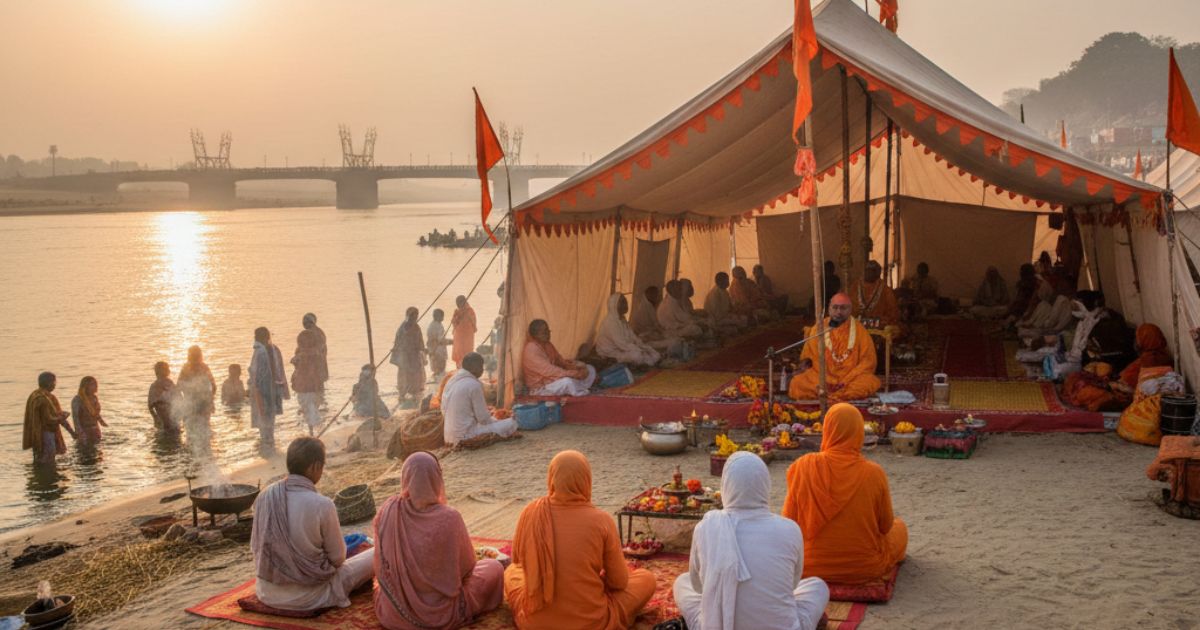
Step 1: Sankalp (Sacred Intention) Begin by taking sankalp—stating your name, gotra (lineage), location, date, and intention for the puja. This declaration focuses your practice and invokes divine blessings.
Step 2: Kalash Sthapana (Sacred Pot Installation)
- Fill a copper or clay pot with water
- Add mango leaves around the rim
- Place a coconut on top
- This represents invoking divine presence
Step 3: Ganesh Puja
- Always begin by invoking Lord Ganesha, remover of obstacles
- Offer flowers, incense, and modak (sweet offering)
- Chant: “Om Gan Ganapataye Namah”
Step 4: Surya Puja (Sun Worship) The central focus of Makar Sankranti—worshipping Surya Deva:
- Face east toward the rising sun
- Offer water (arghya) to the Sun with both hands
- Offer red flowers (especially hibiscus), red cloth, and jaggery
- Light a ghee lamp
- Offer incense and prasad (khichdi, til-gud laddoo)
Step 5: Til (Sesame) Rituals Sesame plays a special role in Makar Sankranti:
- Mix sesame seeds with water and offer to the Sun
- Apply sesame oil to the body before bathing (if not already bathed)
- Prepare sesame-based offerings
Step 6: Prayers and Mantras Recite Surya mantras and stotras (detailed in next section)
Step 7: Aarti Perform aarti with a lit lamp, moving it in circular motions before the deity while singing devotional songs
Step 8: Prasad Distribution Offer the prepared prasad to the deity, then distribute among family and neighbors
Essential Mantras and Prayers
Surya Gayatri Mantra:
ॐ भास्कराय विद्महे महातेजाय धीमहि।
तन्नो सूर्यः प्रचोदयात्॥

Om Bhaskaraya Vidmahe Mahatejaya Dhimahi।
Tanno Suryah Prachodayat॥
Aditya Hridayam (for those seeking deeper practice): A powerful stotra praising the Sun, traditionally believed to grant success and remove obstacles
Simple Surya Mantra:
ॐ सूर्याय नमः
Om Suryaya Namah
(Chant 108 times with mala beads)
Makar Sankranti Specific Prayer:
ॐ ह्रां ह्रीं ह्रौं सः सूर्याय नमः
Om Hram Hreem Hraum Sah Suryaya Namah
Sacred Bath and Donation Rituals
Ideal Snan Muhurat at Sangam
For Sangam Snan 2026 at Prayagraj, the ideal sequence is:
Optimal Timing:
- Arrive at Sangam before sunrise (around 6:00-6:30 AM)
- Perform sankalp at the riverbank
- Take your sacred bath during Maha Punya Kaal (7:00-9:00 AM)
- If possible, immerse yourself at least three times
- Face east while bathing
- Pray sincerely while immersed in the sacred waters
Bathing Procedure:
- Remove footwear before approaching water
- Mentally bow to Ganga, Yamuna, and Saraswati
- Take sankalp stating your purpose
- Enter water slowly with reverence
- Completely immerse at least three times
- While immersed, pray for purification and blessings
- Offer water to the Sun (if risen) while still in the river
- Exit and change into clean, dry clothes
Traditional Daan (Charity) Practices
Makar Sankranti is considered supremely auspicious for daan (charitable donations). The principle is simple: what you give returns multiplied, and giving on this day purifies both giver and receiver.
Traditional Philosophy: Sanskrit texts state: “Til daan, gur daan, Sankranti mein karo koi bhi daan, janam-janam ka sukh prapt hoga” (Donate sesame and jaggery on Sankranti—any donation brings lifetimes of happiness)
Items to Donate for Maximum Spiritual Benefit
Essential Donation Items:
Til (Sesame Seeds) and Gud (Jaggery): The signature Makar Sankranti donation symbolizing sweetness and bonding
Warm Clothing: Blankets, shawls, sweaters (especially relevant in January cold)
Food Grains: Rice, wheat, lentils (sustenance for those in need)
Utensils: Pots, pans, plates (helping households function)
Cows or Cow-Related Items: Cow donation is traditionally considered highly meritorious; alternatively, donate cow feed, shelter support
Educational Materials: Books, notebooks, pens for underprivileged children
Money: Direct financial assistance to worthy causes
Khichdi: Preparing and distributing khichdi (rice and lentil dish) is traditional on this day
To Whom to Donate:
- Brahmins and spiritual seekers
- Poor and needy families
- Temples and ashrams
- Gaushalas (cow shelters)
- Educational institutions
- Elderly and disabled individuals
The key is sincere intention—don’t donate for show or expectation of return, but with genuine compassion and gratitude for what you have.
Regional Celebrations Across India
Different Names and Traditions
Makar Sankranti 2026 is celebrated pan-India but under different names with regional variations:
Pongal (Tamil Nadu): Four-day harvest festival; preparation of sweet rice dish called Pongal
Lohri (Punjab): Celebrated eve of Makar Sankranti with bonfires, dancing, and singing
Uttarayan (Gujarat): Famous for massive kite-flying competitions filling skies with colorful kites
Magh Bihu (Assam): Harvest festival with community feasts and bonfire ceremonies
Poush Sankranti (West Bengal): Special sweets made from rice and jaggery; Gangasagar pilgrimage
Suggi (Karnataka): Harvest thanksgiving with traditional rangoli and cattle decoration
Khichdi (UP and Bihar): Preparation and donation of khichdi; Sangam bath at Prayagraj
This diversity demonstrates Makar Sankranti’s universal appeal across India’s cultural landscape while maintaining core themes of gratitude, renewal, and devotion.
Traditional Foods and Prasad for Makar Sankranti
Sacred Food Offerings
Til-Gud Laddoos: Sweet balls made from sesame and jaggery symbolizing unity
Khichdi: Simple one-pot dish of rice and lentils, offered as prasad
Puran Poli: Sweet flatbread stuffed with lentils and jaggery (Maharashtra)
Til Chikki: Brittle made from sesame and jaggery
Gajak: Sesame or peanut brittle popular in North India
Undhiyu: Mixed vegetable dish (Gujarat)
Pongal: Sweet rice preparation (South India)
Regional Delicacies
Each region adds unique flavors to Makar Sankranti celebrations—from Gujarat’s undhiyu to Tamil Nadu’s pongal, from Punjab’s sarson da saag to Assam’s pitha. The common thread? Gratitude for harvest, celebration of abundance, and sharing with community.
Do’s and Don’ts on Makar Sankranti
DO:
- Wake early and maintain spiritual mindset
- Take sacred bath, preferably at holy river
- Donate generously according to capacity
- Perform Surya puja with devotion
- Eat sattvic, vegetarian food
- Wear clean, traditional clothing
- Share sweets and joy with neighbors
- Forgive past grievances and start fresh
- Fly kites (if regionally appropriate)
- Express gratitude for blessings received
DON’T:
- Consume non-vegetarian food or alcohol
- Engage in arguments or negativity
- Ignore charitable opportunities
- Skip the sacred bath if possible
- Forget to offer water to the Sun
- Waste food or resources
- Harbor grudges or ill-will
- Miss the auspicious muhurat for key rituals
- Overlook elders’ blessings
- Approach the day as mere holiday without spiritual significance
Sangam Snan Planning:
- Optimal timing recommendations for your Sangam Snan 2026
- Guidance on proper bath procedures and prayers
- Accommodation assistance near Triveni Sangam
Consultation Services:
- Live webinars on Makar Sankranti significance
- One-on-one consultations for spiritual planning
- Post-festival integration guidance
Connect with AstroInsights.guru for your transformative Prayagraj Makar Sankranti experience:
🌐 Website: astroinsights.guru
📞 Phone: +916306407641
📧 Email: astroinsights.guru@gmail.com
Conclusion
Makar Sankranti 2026 represents far more than a calendar date—it’s a cosmic doorway to spiritual renewal, karmic purification, and divine blessings. Whether you’re planning your Sangam Snan 2026 at Prayagraj or celebrating from home, approaching this sacred day with proper understanding, correct Makar Sankranti puja vidhi, and sincere devotion amplifies its transformative power. The Sun’s northward journey mirrors our own spiritual journey from darkness to light, from ignorance to wisdom. This January 14, 2026, join millions in celebrating this beautiful festival—perform your sacred bath, make generous donations, worship the Sun with devotion, share sweetness with your community, and embrace the new beginning this auspicious day offers. May this Makar Sankranti date 2026 mark the start of your most blessed and prosperous year yet.
FAQs
1. Can I take my Makar Sankranti sacred bath at any river, or must it be at Prayagraj?
While bathing at Prayagraj’s Triveni Sangam during Magh Mela is considered especially powerful, any sacred river—Ganga, Yamuna, Narmada, Godavari, etc.—carries spiritual benefit on Makar Sankranti. If no river is accessible, even bathing at home with sincere prayers and sacred intentions holds value. The key is devotion and purity of intention, not just geographical location.
2. What if the Sankranti moment occurs at an inauspicious time or during the night?
Hindu tradition recognizes this possibility and designates Punya Kaal and Maha Punya Kaal periods extending several hours after the Sankranti moment specifically for this reason. Perform your sacred bath and rituals during these designated auspicious periods rather than trying to bathe at 2 AM when the actual transition occurs. Consult a qualified astrologer for precise timing appropriate to your situation.
3. Is Makar Sankranti equally important for all zodiac signs, or does it affect some more than others?
Makar Sankranti’s general spiritual benefits apply universally to all devotees regardless of their zodiac sign. However, specific astrological impacts vary based on individual birth charts. For those with prominent Capricorn placements or current transits affecting Capricorn in their chart, the effects may be more pronounced. Consulting with an astrologer provides personalized insight into how Makar Sankranti 2026 specifically affects you.
4. Can women participate fully in Makar Sankranti rituals during menstruation?
Traditional practices have varied restrictions, but increasingly, spiritual teachers emphasize that sincere devotion and purity of heart matter more than physical conditions. Many progressiveSesame seeds generate warmth in the body—ideal for winter. Jaggery provides energy and cleanses the body. Together, they symbolize unity (seeds sticking together with jaggery). Spiritually, til represents individuals coming together in sweetness (gud), promoting harmony. Ayurvedically, both ingredients balance vata dosha aggravated during winter. The combination thus serves physical health, symbolic meaning, and traditional continuity—making it the signature Makar Sankranti offering. interpretations suggest that women can participate in prayers and charitable activities even during menstruation, though some may choose to postpone river bathing for personal comfort. Follow your own spiritual guidance and family traditions on this personal matter.