Explore Basant Panchami 2026, highlighting Saraswati Puja vidhi, spiritual importance, yellow rituals, traditions, and blessings of knowledge, art, and education.
Can you feel it? That subtle shift in the air when winter’s harshness begins melting into spring’s gentle warmth? Basant Panchami 2026 marks this beautiful transition—a festival celebrating not just seasonal change but the awakening of knowledge, creativity, and wisdom. Dedicated to Goddess Saraswati, the embodiment of learning and arts, this sacred day holds special significance for students, artists, musicians, and anyone seeking intellectual or spiritual growth. But there’s more to Basant Panchami than yellow clothes and sweets—it’s a profound spiritual opportunity to invoke divine blessings for wisdom and creative expression. Let’s explore the complete Basant Panchami puja vidhi, understand its deeper significance, and discover how to celebrate this vibrant festival authentically in 2026.
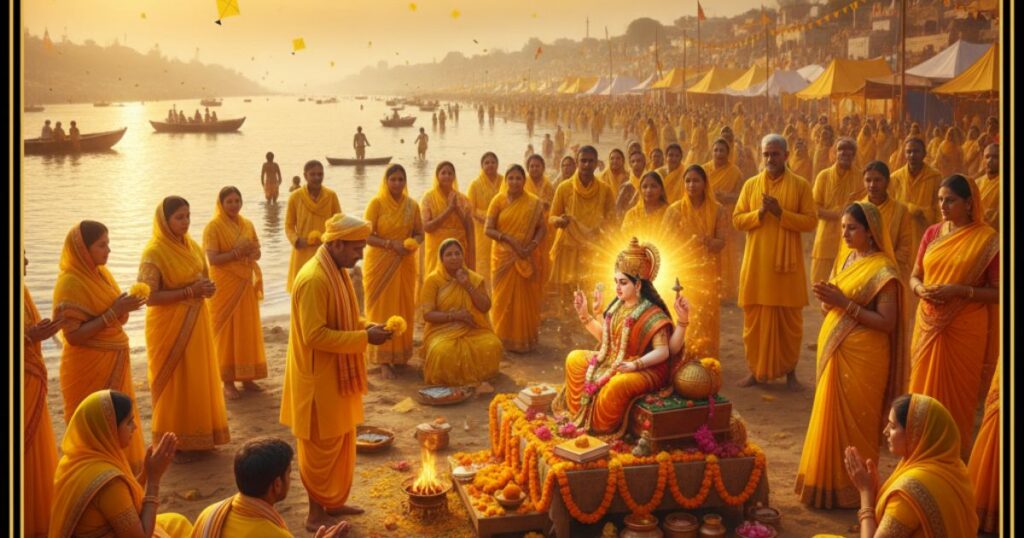
Understanding Basant Panchami 2026 and Its Significance
The Arrival of Spring and Spiritual Awakening
“Basant” means spring, and “Panchami” refers to the fifth day of the lunar month. Basant Panchami thus celebrates the fifth day of the waxing moon in the month of Magha, marking spring’s official arrival in the Hindu calendar. This isn’t merely a meteorological observation—it’s a profound recognition that external seasons mirror internal spiritual cycles.
Just as nature awakens from winter dormancy with new buds, flowers, and life, Basant Panchami represents the awakening of consciousness from ignorance to knowledge. The mustard fields turning golden yellow across North India perfectly symbolize this illumination—darkness giving way to light, cold yielding to warmth, barrenness transforming into abundance.
Think of it as nature’s graduation ceremony, where life itself celebrates learning, growth, and the eternal renewal that knowledge brings.
Connection with Goddess Saraswati
Goddess Saraswati—dressed in pure white, seated on a white lotus, holding a veena (musical instrument) and sacred texts—represents the pure essence of knowledge, music, arts, and wisdom. Unlike material goddesses associated with wealth or power, Saraswati embodies the intangible yet invaluable gifts of learning and creativity.
Basant Panchami 2026 is considered Saraswati’s birthday by some traditions, while others believe she manifested on this day to bring order to creation through the power of sound and language. Either way, this day is supremely auspicious for invoking her blessings, initiating children into formal education, and deepening one’s own pursuit of knowledge.
In a world increasingly valuing information over wisdom, Basant Panchami reminds us that true knowledge isn’t just data accumulation—it’s the illumination that transforms consciousness itself.
Basant Panchami Date and Auspicious Timings in 2026
Exact Date and Panchami Tithi
Basant Panchami 2026 falls on Friday, January 23, 2026. The festival is celebrated on the Panchami Tithi (fifth lunar day) of Shukla Paksha (waxing moon phase) in the Hindu month of Magha.
Panchami Tithi Timings:
- Begins: January 22, 2026, at approximately 01:27 AM
- Ends: January 23, 2026, at approximately 12:09 AM
According to traditional practice, when Panchami Tithi prevails during the Purvahna Kaal (forenoon), that day is considered most auspicious for Saraswati Puja. Since the tithi covers most of January 23th, this becomes the primary celebration date.
Best Muhurat for Puja
Purvahna Kaal (Morning Period):
- Timing: Approximately 6:30 AM to 12:00 PM on January 23, 2026
- Significance: This is the golden window for Saraswati Puja 2026
Most Auspicious Time:
- Peak Muhurat: Approximately 7:40 AM to 06:00 PM
- During these hours, perform the main puja rituals for maximum spiritual benefit
For students planning Akshar Abhyasam (writing initiation ceremony), the Purvahna Kaal on January 23th offers the ideal timing.
Note: These timings are approximate. For precise muhurat calculations based on your specific location and birth chart, consult a qualified astrologer closer to the date.
Basant Panchami Significance in Hindu Tradition
Mythological Origins and Stories
Several beautiful mythological narratives explain Basant Panchami significance:
Creation Story: When Brahma created the universe, he felt something was missing. The world was silent and colorless. He meditated upon the Supreme, and Goddess Saraswati manifested, bringing the gifts of speech, music, knowledge, and the arts. Suddenly, creation came alive with sound, color, and meaning—this transformation occurred on Basant Panchami.
Kamadeva’s Story: Some traditions associate Basant Panchami with Kamadeva (god of love), who attempted to disturb Lord Shiva’s meditation on this day to help Parvati win Shiva’s attention. Though reduced to ashes by Shiva’s third eye, Kamadeva was later restored, symbolizing the power of love and desire channeled toward divine purposes.
Regional Legends: In Bengal, this day commemorates the birth of Shri Chaitanya Mahaprabhu, the great Vaishnava saint. In Punjab, it’s associated with the martyrdom of Hakikat Rai, a young Hindu who refused to convert despite persecution.
Cultural and Regional Celebrations
Basant Panchami 2026 showcases India’s beautiful diversity:
North India: Yellow dominates—clothes, food, flowers. Kite flying competitions fill skies. Temples conduct elaborate Saraswati pujas.
Bengal and Eastern India: Schools and colleges organize grand Saraswati Puja celebrations. Books and musical instruments are worshipped. Cultural programs showcase music and dance.
South India: Celebrated as Sri Panchami, focusing on education and learning. Children formally begin writing on this day.
Maharashtra: Known as Shri Panchami or Saraswati Puja, with special focus on yellow clothing and saffron-flavored sweets.
Punjab: Celebrated as Basant with kite flying and special feasts marking spring’s arrival.
Despite regional variations, the core themes remain universal—honoring knowledge, celebrating spring, and seeking Saraswati’s blessings.
Complete Basant Panchami Puja Vidhi
Pre-Puja Preparations
One Day Before:
- Clean your puja space thoroughly
- Gather all necessary materials (listed below)
- Prepare or purchase yellow offerings and prasad
- If possible, fast or eat light, sattvic food
- Keep books, musical instruments, or study materials ready for worship
Morning of Basant Panchami:
- Wake early during Brahma Muhurta (pre-dawn)
- Take bath and wear yellow or white clothing
- Prepare your puja altar with clean cloth (preferably yellow or white)
- Arrange Goddess Saraswati’s image or idol
- Light incense to purify the atmosphere
Essential Puja Materials:
- Saraswati idol or picture
- Yellow cloth for altar
- Fresh yellow flowers (marigolds, chrysanthemums)
- Incense sticks and dhoop
- Camphor and ghee lamp
- Fruits (especially bananas)
- Sweets (preferably yellow-colored)
- Sacred books or scriptures
- Musical instruments (if you play any)
- Kumkum, turmeric, and sandalwood paste
- Rice grains
- Water in kalash (sacred pot)
- Betel leaves and nuts
- Coconut
Step-by-Step Saraswati Puja 2026 Procedure
Step 1: Dhyana (Meditation and Invocation) Begin by sitting quietly before the altar, closing your eyes, and visualizing Goddess Saraswati. Mentally invite her presence into your puja space.
Step 2: Pranayama and Sankalp Perform three deep breaths (pranayama) to center yourself. Then take sankalp—state your name, gotra (if known), location, date, and intention: “I am performing this Saraswati Puja to receive the goddess’s blessings for knowledge, wisdom, and creative expression.”
Step 3: Kalash Sthapana Establish the sacred water pot (kalash) representing divine presence and auspiciousness.
Step 4: Ganesh Puja Always begin by invoking Lord Ganesha to remove obstacles:
- Offer flowers and modak
- Chant: “Om Gam Ganapataye Namah” (11 times)
Step 5: Saraswati Avahan (Invocation) Formally invite Goddess Saraswati into your puja space:
या कुन्देन्दुतुषारहारधवला या शुभ्रवस्त्रावृता।
या वीणावरदण्डमण्डितकरा या श्वेतपद्मासना॥

Ya Kundendu Tusharahara Dhavala Ya Shubhravastravrta।
Ya Vina Varadanda Manditakara Ya Shwetapadmasana॥
Step 6: Shodashopachara Puja (16-Step Worship) Offer the traditional 16 offerings:
- Dhyana (meditation)
- Avahana (invocation)
- Asana (offering seat)
- Padya (washing feet)
- Arghya (offering water)
- Achamana (offering water to drink)
- Snana (ritual bath with water/milk)
- Vastra (offering cloth—yellow or white)
- Yajnopavita (sacred thread)
- Gandha (sandalwood paste)
- Pushpa (flowers—especially yellow)
- Dhupa (incense)
- Deepa (lamp)
- Naivedya (food offerings)
- Tambula (betel leaves)
- Namaskara (prostration)
Step 7: Book and Instrument Worship Place your books, notebooks, musical instruments, pens, or tools of learning at Saraswati’s feet. Don’t study or use these items on Basant Panchami—this is their rest day, their own puja day.
Step 8: Mantra Chanting Recite Saraswati mantras (detailed in next section) with devotion—minimum 108 times using mala beads.
Step 9: Aarti Perform aarti with ghee lamp, moving it in circular clockwise motion while singing Saraswati aarti.
Step 10: Pushpanjali Offer flowers to the goddess while reciting:
Om Aim Saraswatyai Namah
Step 11: Prasad Distribution Offer prepared prasad (yellow sweet rice, kesari, or other sweets) to the goddess, then distribute among family members and share with neighbors.
Step 12: Visarjan (Conclusion) Thank Goddess Saraswati for her presence and blessings, requesting her to remain in your heart always.
Essential Mantras and Prayers
Saraswati Beej Mantra:
ॐ ऐं सरस्वत्यै नमः
Om Aim Saraswatyai Namah
(Chant 108 times for knowledge and wisdom)
Saraswati Gayatri Mantra:
ॐ वाग्देव्यै च विद्महे कामराजाय धीमहि।
तन्नो देवी प्रचोदयात्॥

Om Vagdevyai Cha Vidmahe Kamarajaya Dhimahi।
Tanno Devi Prachodayat॥
Saraswati Vandana:
सरस्वति नमस्तुभ्यं वरदे कामरूपिणि।
विद्यारम्भं करिष्यामि सिद्धिर्भवतु मे सदा॥

Saraswati Namastubhyam Varade Kamarupini।
Vidyarambham Karishyami Siddhirbhavatu Me Sada॥
Medha Suktam (for those seeking deeper practice): A powerful Vedic hymn invoking intelligence, memory, and intellectual brilliance.
Chant any or all of these mantras with sincerity and devotion for maximum benefit.
The Sacred Yellow Color Tradition
Symbolism of Yellow in Basant Panchami
Yellow isn’t just a color choice—it’s deeply symbolic. In Hindu tradition, yellow represents:
Knowledge and Learning: Like golden sunlight dispelling darkness, knowledge illuminates ignorance
Spring and Vitality: Mustard fields blooming yellow announce spring’s arrival
Auspiciousness: Yellow is considered highly auspicious and prosperity-attracting
Goddess Saraswati’s Association: While Saraswati wears white (purity), her devotees wear yellow (knowledge-seeking)
Solar Energy: Yellow connects to solar energies—vitality, clarity, and life force
Wearing yellow on Basant Panchami 2026 isn’t superstition—it’s intentional participation in the festival’s energetic signature.
Yellow Foods and Offerings
Traditional yellow foods for Basant Panchami include:
Kesar Bhaat (Sweet Yellow Rice): Rice cooked with saffron, sugar, and ghee Kesari or Sheera: Semolina pudding colored with saffron Boondi Ladoo: Yellow sweet balls made from gram flour Mango-based dishes: Any preparation highlighting yellow color Yellow Dal: Lentils prepared festively Pineapple and Bananas: Natural yellow fruits as offerings
The idea is celebrating abundance, sweetness, and the golden quality of refined consciousness.
Yellow Clothing and Decoration
What to Wear:
- Traditional yellow sarees, salwar-kameez, or kurtas
- Yellow accessories—dupattas, turbans, scarves
- If full yellow feels excessive, incorporate yellow significantly in your outfit
Home Decoration:
- Yellow flowers everywhere—marigolds especially
- Yellow rangoli designs at entrance
- Yellow cloth on puja altar
- Mango leaves on doorways (traditional and auspicious)
Creating this yellow environment isn’t mere aesthetics—it’s creating an energetic field aligned with the festival’s spiritual frequency.
Special Rituals for Students and Knowledge Seekers
Akshar Abhyasam (Learning Initiation for Children)
Basant Panchami 2026 is the most auspicious day for formally initiating children into the world of learning through Akshar Abhyasam or Vidya Arambham.
Procedure:
- After Saraswati Puja, bring the child before the altar
- Place rice grains or flour in a tray
- Guide the child’s hand to write “Om” or their first letters
- Can also be done on a slate, notebook, or even tongue using honey (symbolically)
- Seek Saraswati’s blessings for the child’s educational journey
This ceremony is believed to ensure smooth learning, good memory, and academic success throughout life.
Book and Instrument Worship
For students and professionals:
What to Do:
- Gather all books, notebooks, laptops, musical instruments, art supplies—any tools of learning
- Clean them respectfully
- Place them at Saraswati’s feet during puja
- Don’t use them on Basant Panchami (give them rest)
- Resume studies the following day with renewed energy
This practice acknowledges that knowledge doesn’t reside in you alone but in the tools and sources through which you access it. Showing respect to these tools invites Saraswati’s continued blessings.
Basant Panchami at Prayagraj During Magh Mela
Enhanced Spiritual Significance at Sangam
When Basant Panchami falls during Magh Mela at Prayagraj (as it does in 2026), the spiritual power multiplies exponentially. This confluence of auspicious festival and sacred location creates extraordinary opportunities:
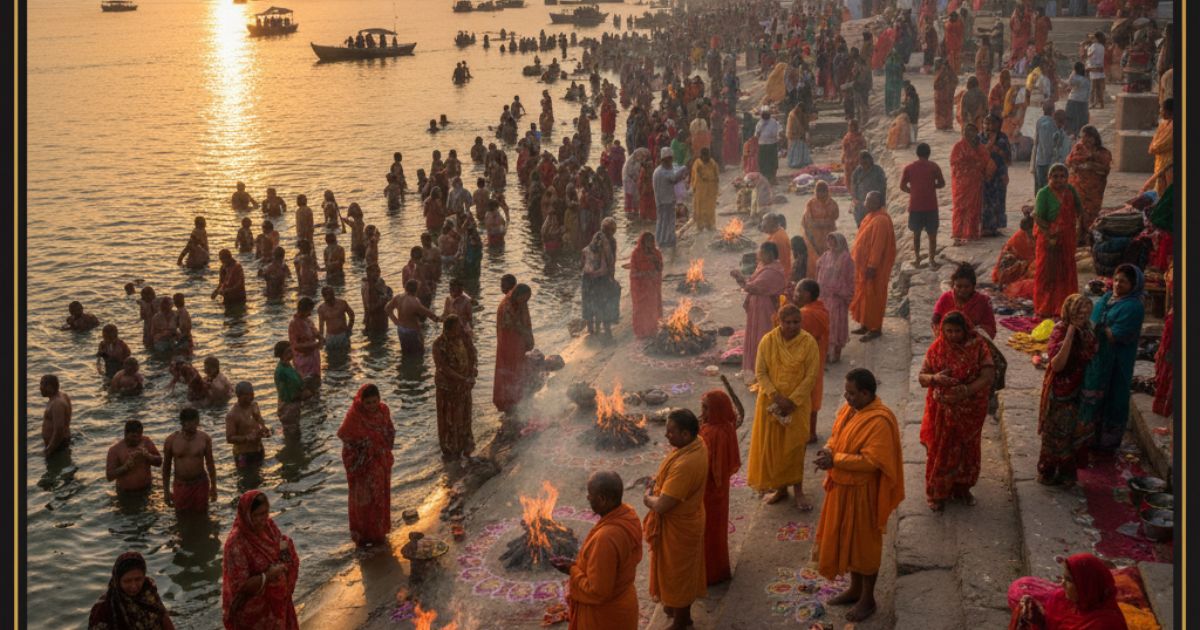
Sacred Bath at Sangam: Taking your holy dip at Triveni Sangam on Basant Panchami combines purification with knowledge-seeking. Many pilgrims specifically time their Magh Mela visit to coincide with this day.
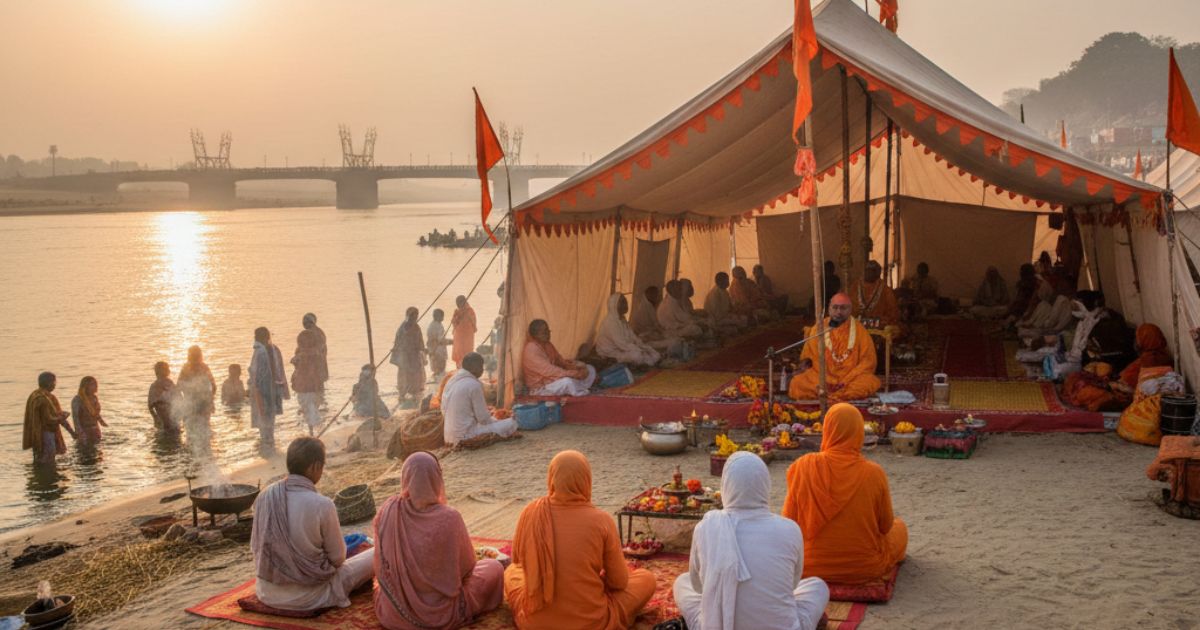
Collective Saraswati Puja: Numerous ashrams and spiritual organizations conduct grand Saraswati Pujas at Prayagraj. Participating in these collective celebrations amplifies individual benefits.
Educational Blessings: Students traveling to Prayagraj for Magh Mela often prioritize Basant Panchami for special prayers regarding their studies and examinations.
If you’re planning to be at Prayagraj during Magh Mela, don’t miss celebrating Basant Panchami at this supremely sacred location.
Traditional Foods and Prasad for Basant Panchami
Sweet Yellow Rice (Kesar Bhaat)
The signature prasad for Basant Panchami:
Ingredients:
- 1 cup rice
- 2 cups milk
- 1/2 cup sugar
- Few strands of saffron
- Ghee
- Dry fruits (cashews, raisins, almonds)
- Cardamom powder
Preparation:
- Soak saffron in warm milk
- Cook rice until soft
- Add saffron milk, sugar, cardamom
- Fry dry fruits in ghee and add
- Mix well and offer to Goddess Saraswati
Regional Delicacies
Bengal: Khichuri (savory rice and lentil dish) and sweet mishti doi Punjab: Makki di roti and sarson da saag (though not yellow, traditional for Basant) Maharashtra: Puran poli and kesari bhaat South India: Kesari or sweet semolina pudding
Each region adds its unique flavor while maintaining the yellow theme and spirit of celebration.
Do’s and Don’ts on Basant Panchami
DO:
- Wake early and maintain devotional mindset
- Wear yellow or white clothing
- Perform Saraswati Puja with complete procedures
- Worship your books and learning tools
- Initiate children into formal education (Akshar Abhyasam)
- Donate to educational institutions or support students’ education
- Fly kites (traditional in many regions)
- Share yellow sweets with neighbors
- Begin new learning endeavors (courses, skills, instruments)
- Maintain cleanliness and purity
DON’T:
- Use your books or study materials on this day (it’s their puja day)
- Consume non-vegetarian food or alcohol
- Engage in negative speech or actions (Saraswati is goddess of pure speech)
- Skip the puja if you’re a student or knowledge seeker
- Ignore charitable opportunities related to education
- Forget to express gratitude for knowledge received
- Miss the auspicious muhurat for main rituals
🌐 Website: astroinsights.guru
📞 Phone: +916306407641
📧 Email: astroinsights.guru@gmail.com
Conclusion
Basant Panchami 2026 offers a beautiful opportunity to honor the divine feminine principle of knowledge and creativity. Whether you’re a student seeking academic success, an artist invoking creative inspiration, a professional pursuing excellence, or simply a sincere devotee honoring Goddess Saraswati, this festival welcomes all who value learning and wisdom. The complete Basant Panchami puja vidhi isn’t complex, but when performed with devotion and understanding, it opens doors to intellectual and spiritual growth that extend far beyond January 23th. As you wear yellow, prepare saffron-scented prasad, worship your books, and chant Saraswati mantras, remember—you’re not just following tradition but participating in an ancient practice that has inspired countless scholars, artists, and seekers for millennia. May Basant Panchami significance illuminate your consciousness, may Goddess Saraswati bless your pursuit of knowledge, and may this beautiful spring festival mark the beginning of your most inspired and enlightened year yet.
FAQs
1. Can I perform Saraswati Puja if I’m not a student or don’t work in education/arts fields?
Absolutely! Saraswati governs all forms of knowledge—not just academic. Financial knowledge, parenting wisdom, spiritual understanding, technical skills, life experience—all fall under her domain. Anyone seeking clarity, wisdom, or better decision-making benefits from Saraswati’s blessings. The puja is universal, not limited to students or artists.
2. Is it necessary to wear only yellow, or can I incorporate other colors on Basant Panchami?
While yellow is traditional and recommended, it’s not absolutely mandatory. If yellow doesn’t suit you or isn’t available, white (Saraswati’s color) is perfectly acceptable. Even incorporating significant yellow elements—dupatta, accessories, flowers—honors the tradition. Devotion matters more than perfect color coordination.
3. Why shouldn’t we study or use books on Basant Panchami if it’s dedicated to the goddess of learning?
Think of it as giving your tools of learning their own worship day. Throughout the year, books serve you—on Basant Panchami, you serve them by offering rest and worship. This practice cultivates gratitude and acknowledges that knowledge comes through instruments that deserve respect. Resume studies the next day with renewed energy and blessings.
4. Can Akshar Abhyasam be performed for children of any age, or is there an ideal age?
Traditionally, Akshar Abhyasam is performed when a child is between 3-5 years old—old enough to hold a writing instrument with guidance but young enough to be formally initiated into learning. However, there’s flexibility. Some families perform it earlier as a blessing ceremony, others wait until formal schooling begins. The key is the child’s developmental readiness and family tradition.
5. What’s the connection between Basant Panchami and kite flying, especially in North India?
Kite flying on Basant Panchami celebrates spring’s arrival and the shift toward longer, brighter days. Kites soaring high symbolize aspirations, freedom, and reaching toward higher consciousness. The activity also brings communities together outdoors after winter confinement. While not directly religious, it’s a joyful cultural expression of the festival’s themes—elevation, brightness, and celebration of life’s renewal.