Introduction to Diwali Puja Items List
Discover the complete list of Diwali Puja essentials. From idols to offerings, learn what to prepare at home for wealth, happiness, and divine blessings.
Diwali approaches, and with it comes the beautiful opportunity to welcome divine blessings into your home through sacred ritual. But standing in your kitchen, staring at an endless diwali puja guide online, you feel overwhelmed: What exactly do you need? Which items are truly essential versus nice-to-have? How do you set up your puja space when your home isn’t a traditional temple?
The reality is this: most people either spend excessive time and money gathering items they don’t really need, or they rush to the puja unprepared, missing crucial elements that make the ritual spiritually potent.
This comprehensive guide cuts through the confusion. We provide a complete diwali puja items list organized by category—from absolutely essential ritual components to optional enhancements. More importantly, we explain the spiritual significance of each item, so you understand why it matters rather than simply collecting things.
Whether you’re performing Diwali puja for the first time or looking to deepen your practice, whether you have ample resources or need to work within budget constraints, this diwali puja guide ensures you’re genuinely prepared to honor goddess lakshmi worship with authenticity, reverence, and effectiveness.
Let’s transform Diwali preparation from stressful shopping into joyful spiritual readiness.
Understanding Diwali: The Festival of Lights and Prosperity
Spiritual Significance of Diwali Puja
Diwali celebrates multiple sacred dimensions simultaneously:
Victory of Light Over Darkness: The festival marks Lord Rama’s return from exile, his victory over demon Ravana, symbolizing triumph of good over evil, knowledge over ignorance, consciousness over unconsciousness.
Lakshmi’s Emergence: During the cosmic ocean churning (Samudra Manthan), Goddess Lakshmi—embodiment of wealth, beauty, and grace—emerged on Diwali. Worshipping her on this day invites prosperity and blessings.
New Beginnings: Diwali falls on Amavasya (new moon), symbolizing endings and fresh starts. New moon energy supports releasing old patterns and inviting new abundance.
Collective Consciousness Elevation: Millions worshipping simultaneously create enormous spiritual energy. Diwali’s collective devotion amplifies individual practice through what scientists call “morphic resonance.”
Karmic Cleansing: The sacred vibrations generated during Diwali puja are believed to dissolve karmic debts and negativity accumulated through the year.
Why Proper Preparation Matters
Preparation isn’t about perfectionistic anxiety—it’s about respect and intentionality.
Preparation Creates Focus: When you’ve thoughtfully gathered items beforehand, you can fully engage in ritual rather than anxiously searching for forgotten supplies.
Each Item Carries Meaning: Rather than mechanically using objects, understanding their significance allows genuine engagement with deeper layers of ritual.
Energetic Readiness: Your home space, consecrated through careful preparation, becomes magnetized for receiving divine blessings. Haphazard or last-minute setups lack this energetic foundation.
Honoring the Divine: Preparation demonstrates respect. Would you invite an honored guest without tidying your home? Similarly, preparing thoroughly honors the goddess you’re inviting.
Complete Diwali Puja Items List: Everything You Need
Essential Ritual Items
These form the core of your puja:
Sacred Vessels (Patra):
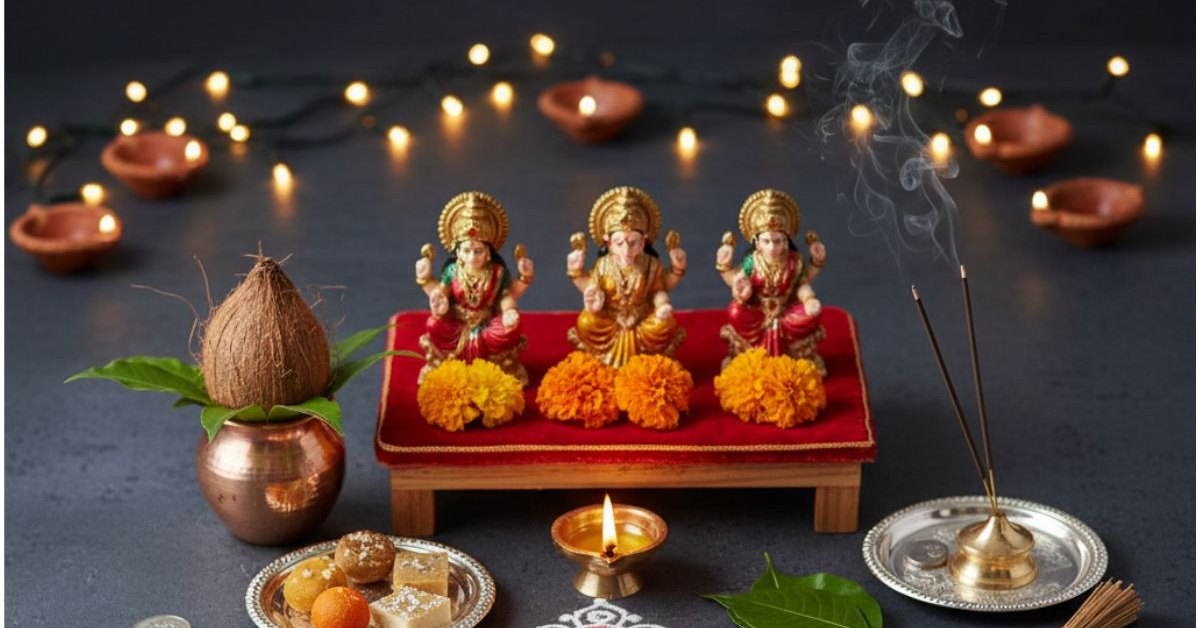
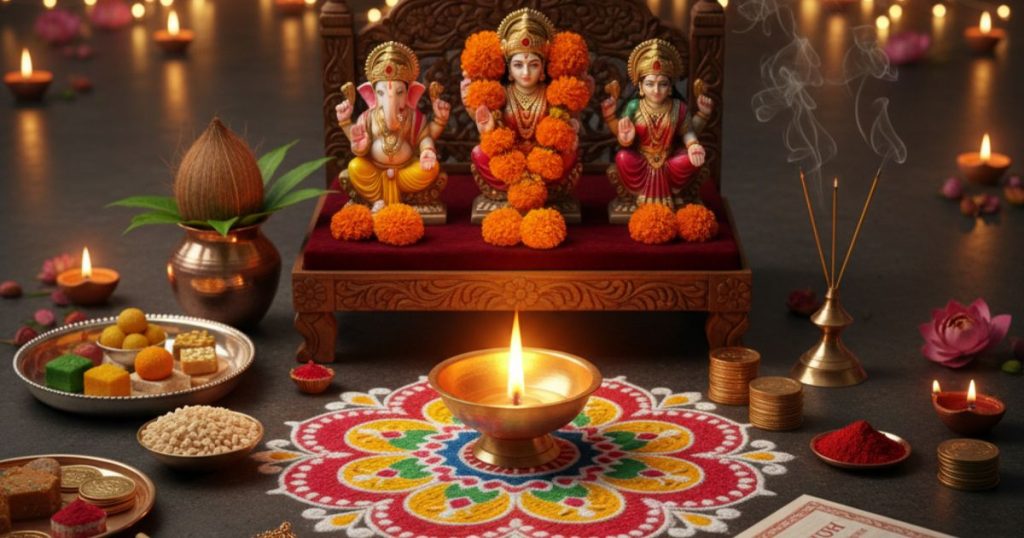
- Kalash (Metal Pot): Copper or brass, filled with water, mango leaves, and topped with coconut. Represents divine presence.
- Panchapatram (Sprinkling Vessel): Small metal vessel for sprinkling water. Can be simple cup or specialized vessel.
- Diya (Oil Lamps): Earthen or metal lamps for lighting. Traditional choice—earthen diyas—supports artisans.
Puja Thali (Worship Plate): Large plate or tray for organizing all ritual items within easy reach. Stainless steel or brass preferable.
Ritual Cloths:
- Red or Yellow Cloth: To place beneath deity image
- White or Cream Cloth: For covering items temporarily
- Clean Kitchen Towel: For drying hands and materials
Deity Items:
- Lakshmi Idol or Picture: Central focus of worship (statue, framed image, or printed picture acceptable)
- Optional Companion Deities: Ganesha (obstacle remover), Hanuman (strength), Krishna (divine love)
Purification Items:
- Sacred Water: Ganga jal (holy Ganges water) if available; regular filtered water suffices
- Turmeric Powder: For purification and auspiciousness
- Kumkum (Vermillion): Red powder for marking deity and self
Decorative and Atmospheric Elements
These create sacred ambiance:
Lighting:
- Oil Lamps (Diyas): Multiple—can never have too many during Diwali
- Ghee: For lamps (better than oil for purity)
- Candles: Backup option, though traditional diyas preferred
- String Lights: Optional, for home decoration
Fragrance:
- Incense Sticks (Agarbatti): Sandalwood, rose, or lotus varieties
- Camphor (Kapoor): For aarti and purification (use sparingly, toxic if excessive)
- Fresh Flowers: Marigolds, roses, or lotus (fresh, pesticide-free if possible)
Sound Elements:
- Bell or Ghanti: For ringing during worship (creates auspicious vibrations)
- Conch (Shankh): Optional, for blowing (produces sacred sound)
- Drum (Mridangam): If musically inclined, enhances atmosphere
Food and Offerings
Essential for honoring the goddess:
Sweets (Mithai):
- Homemade Options: Laddus, barfi, kheer (more spiritually potent than store-bought)
- Store-Bought Alternatives: If time-constrained, quality packaged sweets acceptable
- Requirement: Free from onion, garlic, and non-vegetarian ingredients
Fruits:
- Fresh: Bananas, apples, oranges, coconut
- Dry: Dates, raisins, cashews, almonds (unsalted)
Grains and Legumes:
- Rice: White or brown rice for offerings
- Sesame Seeds (Til): Often used in Diwali preparations
- Beans/Lentils: For symbolic offerings
Beverages:
- Milk: Fresh cow’s milk preferred (for ritual consumption)
- Honey: For sweetening offerings
- Ghee: Clarified butter for lamps and offerings
Other Offerings:
- Sugar Crystals: Symbolizing sweetness
- Rock Sugar (Mishri): Traditional offering
- Dry Coconut: Sacred offering item
Optional but Recommended Items
These enhance the experience:
Ritual Accessories:
- Sacred Thread (Janeu): For wearing during puja
- Betel Leaves and Nuts: Traditional offering set
- Sacred Ash (Vibhuti): For applying after puja
- Rudraksha Beads: For mala counting if chanting mantras
Documentation:
- Puja Samagri List: Printed checklist to ensure nothing forgotten
- Notebook: For recording puja details, intentions, or insights
- Camera/Phone: For photographing your beautiful puja setup (capture memories)
Comfort Items:
- Meditation Cushion (Asana): For comfortable sitting
- Small Table or Shelf: To elevate deity at appropriate height
- Comfortable Clothing: Traditional wear makes ritual feel special
Step-by-Step Diwali Puja Guide for Home
Pre-Puja Preparations (2-3 Days Before)
Home Cleaning:
- Deep clean your entire home, especially puja area
- Sweep and mop all floors
- Clean windows and doors
- Declutter—remove unnecessary items, broken things
- Dispose of old items creating stagnant energy
Spiritual Preparation:
- Decide your clear intention for puja (prosperity, health, family harmony, etc.)
- Write intentions in notebook
- Mentally prepare for devotion
- Inform family members about puja plans
- Choose auspicious muhurat (timing)
Material Gathering:
- Purchase all items from diwali puja items list
- Verify quality and freshness of items
- Store safely to prevent damage
- Separate and organize by category
Setting Up Your Puja Space (Day Before or Morning Of)
Choose Location:
- Ideal: Northeast corner (Ishan Kon) of home
- Alternative: East or north-facing wall
- Requirements: Clean, quiet, away from daily traffic, elevated if possible
Arrange Worship Area:
Step 1: Base Preparation
- Clean the floor or shelf thoroughly
- Place clean cloth as base
- Arrange in roughly square or rectangular pattern
Step 2: Deity Placement
- Position Lakshmi idol/image in center
- Ensure facing east or north
- Place at appropriate eye level or slightly elevated
- Surround with fresh flowers
Step 3: Essential Items Arrangement
- Kalash (sacred pot) to right of deity
- Diya (lamp) to left
- Puja thali with all ritual items in front
- Incense holder to side
Step 4: Decorative Elements
- Place fresh flowers around deity
- Arrange additional diyas
- Position lights for ambiance
- Ensure adequate lighting without glare
Step 5: Final Touches
- Sweep area once more
- Sprinkle water for purification
- Light preliminary incense
- Ring bell to begin
The Puja Sequence
Opening Invocation (10 minutes):
Sit comfortably facing deity. Ring bell and state your intention aloud:
“I perform this Diwali puja with complete devotion to Goddess Lakshmi and Lord Ganesha, seeking blessings for prosperity, health, and spiritual growth for myself and my family.”
Ganesha Puja (5-10 minutes):
Begin by honoring Ganesha:
- Light small lamp before Ganesha image (if present)
- Offer flowers
- Chant: “Om Gan Ganapataye Namaha” (11 times)
- Request removal of obstacles to puja
Self-Purification (5 minutes):
- Take water and sip (achamana) while chanting purification mantra
- Sprinkle water on body parts
- Apply turmeric and kumkum on forehead
- This prepares you spiritually
Kalash Sthapana (Sacred Pot Ritual) (5-10 minutes):
- Fill metal pot with water
- Place mango leaves around rim
- Top with coconut
- Tie sacred thread around pot
- Apply kumkum and turmeric
- This becomes goddess’s seat
Lakshmi Invocation (10 minutes):
Chant invocation mantra with full devotion:
“Om Hrim Shrim Lakshmibhyo Namaha”
Or traditional invocation: “Aagaccha Devi! Aagaccha Devi! Aagaccha Devi!” (Come, O Goddess! Come, O Goddess! Come, O Goddess!)
Visualize golden light filling your space as goddess enters.
Main Worship (20-30 minutes):
Perform the 16 traditional services (Shodasopachar):
- Asana (Seat): Offer seat to goddess
- Padya (Foot Water): Sprinkle water symbolically
- Arghya (Hand Washing): Offer water for hands
- Achamaniya (Sipping Water): Water for mouth
- Snan (Bath): Sprinkle water
- Vastra (Cloth): Offer cloth or flowers
- Abharana (Jewelry): Offer flowers as ornaments
- Gandha (Sandalwood): Apply paste or powder
- Pushpa (Flowers): Offer fresh flowers (multiple offerings)
- Dhupa (Incense): Wave incense in circular motions
- Diya (Lamp): Wave lit lamp in aarti fashion
- Naivedya (Food): Offer prepared sweets and fruits
- Tambula (Betel): Offer betel leaves and nuts
- Dakshina (Offering): Place coins or currency before deity
- Namaskara (Bowing): Bow with reverence
- Aarti (Final Worship): See detailed aarti procedure below
Lakshmi Mantras (10-15 minutes):
Chant primary Lakshmi mantra: “Om Shrim Maha Lakshmyai Namaha”
Minimum 108 repetitions. Can use mala beads to count.
Personal Prayers (10 minutes):
In your own words, speak to goddess:
- Express gratitude for current blessings
- Share genuine concerns and needs
- Request specific blessings
- Commit to dharmic living
- Ask for wisdom in managing prosperity
Aarti (5-10 minutes):
The culminating ritual:
- Light aarti lamp (5 small ghee lamps arranged in holder, or single lamp)
- Wave in circular clockwise motions before deity
- Complete 5-7 full circles
- Chant while waving: “Jai Lakshmi Mata, Teri Aarti Gaun…”
- Invite family to participate
- Pass lamp so others can bow to it (receiving blessings through light)
Closing (5 minutes):
- Bow completely before deity
- Offer flowers over image
- Ring bell to conclude
- Distribute prasad (blessed food) to all present
- Thank all who participated
Puja Samagri List: Where to Source Items
Most Reliable Sources:
Indian Grocery Stores:
- Complete puja samagri kits available
- Fresh ingredients (flowers, spices)
- Traditional items (kalash, diyas, idols)
- Competitive pricing
- Staff familiar with ritual requirements
Online Options:
- Amazon
- Specialized puja sites
- Indian e-commerce platforms
- Advantage: Home delivery, comparison shopping
- Disadvantage: Can’t verify freshness beforehand, delivery uncertainty
Local Temple or Community Centers:
- Often sell puja supplies at reasonable prices
- Support spiritual community
- Staff provide guidance on usage
- May offer group puja opportunities
Markets and Bazaars:
- Direct sellers of flowers, vegetables
- Best prices for fresh items
- Negotiate for bulk quantities
- Visit morning for freshest selection
What to Prioritize Buying:
Fresh Items (Purchase 1-2 Days Before):
- Flowers
- Coconut
- Fruits
Non-Perishables (Purchase 1-2 Weeks Before):
- Incense, camphor
- Diyas, lamps
- Ritual items
- Idols or pictures
Fresh Sweets (Purchase Day Before):
- Homemade or baker fresh
- Avoid stale packaged items
- Prepare homemade if time permits
Budget-Friendly Diwali Puja Preparation
Cost-Effective Approach:
Essential Budget (Bare Minimum):
- Picture of Lakshmi: Free (print at home)
- Oil lamp (diya): ₹20-50 / $0.30-0.70
- Incense: ₹20-50 / $0.30-0.70
- Flowers (marigold garland): ₹50-100 / $0.70-1.50
- Sweets (homemade or bulk): ₹100-200 / $1.50-3
- Total: ₹200-400 / $3-6
Moderate Budget (Comfortable Level):
- Lakshmi idol: ₹500-1,000 / $7-15
- Ritual items (kalash, bell, cloth): ₹300-500 / $4-7
- Multiple diyas and ghee: ₹300-500 / $4-7
- Quality flowers: ₹200-300 / $3-4
- Prepared sweets: ₹500-1,000 / $7-15
- Incense, camphor, offerings: ₹200-300 / $3-4
- Total: ₹2,000-3,500 / $30-50
Premium Budget (Elaborate Puja):
- Beautiful idol or framed image: ₹2,000-5,000 / $30-75
- Complete ritual kit: ₹1,500-2,500 / $20-35
- Fresh flowers and decorations: ₹1,000-1,500 / $15-25
- Homemade sweets (ingredients): ₹1,000-1,500 / $15-25
- Quality incense, ghee, offerings: ₹1,000-1,500 / $15-25
- Decorative elements: ₹1,000-1,500 / $15-25
- Total: ₹8,000-15,000 / $120-225
Money-Saving Tips:
- Make Own Sweets: Homemade are more economical and spiritually potent
- Use Available Items: Many household items can substitute (water container for kalash, regular lamp oil, homegrown flowers)
- Print Deity Image: High-quality color print costs minimal but serves well
- Community Resources: Borrow rarely-used items from neighbors
- Group Puja: Share costs with family members
- Online Shopping: Compare prices across platforms
- Non-Festival Timing: Purchase year-round items outside Diwali season for better prices
Goddess Lakshmi Worship: Special Considerations
Lakshmi’s Preferences:
What Pleases Her:
- Cleanliness and organization (she avoids chaos)
- Golden colors (yellow, orange, red)
- Flowers (lotus most preferred)
- Ghee lamps (oil lamps are traditional)
- Honesty and ethical living
- Generous charity and helping poor
What Displeases Her:
- Cluttered, dirty spaces
- Stinginess and greed
- Dishonesty and corruption
- Waste and carelessness
- Excessive materialism without spirituality
- Neglecting family and social duties
Special Lakshmi Worship Practices:
Footprint Welcoming: Draw Lakshmi’s footprints (in rangoli or rice flour) from entrance toward altar, symbolizing inviting her into home.
Rice/Coin Offering: Place coins and rice in small bowl as offering to abundance, then distribute to poor later.
Candle/Lamp Lighting: Light extra lamps throughout home—Lakshmi follows light and illuminated spaces.
Mantras Specific to Lakshmi:
Primary Mantra: “Om Shrim Maha Lakshmyai Namaha” (Most universal and powerful)
Alternative Mantra: “Om Hreem Shrim Lakshmibhyo Namaha”
Extended Mantra: “Om Shreem Mahalakshmiyai Cha Vidmahe Vishnu Patnyai Cha Dhimahi Tanno Lakshmi Prachodayat”
Post-Puja Lakshmi Practices:
- Keep one lamp burning (symbolizing Lakshmi’s presence)
- Maintain cleanliness throughout home
- Practice charity daily
- Repeat gratitude for received blessings
- Avoid wasting food or money
- Keep financial records organized
- Live ethically and honestly
Regional Variations in Diwali Puja Practices
While core principles remain consistent, regional variations exist:
North India (Vedic Tradition):
- Emphasis on Lakshmi and Ganesha
- Grand aarti with multiple lamps
- Rangoli at entrance
- Traditional sweets like laddus
South India (Dravidian Tradition):
- Emphasis on Lakshmi and Kubera (wealth)
- Oil baths and new clothes
- Special South Indian sweets
- Different mantra recitations
West India (Gujarati Tradition):
- Lakshmi Puja with account book worship
- Dry fruit offerings
- Specific Gujarat sweets
- Business-focused blessings
East India (Bengali Tradition):
- Sometimes emphasizes Kali over Lakshmi (regional variation)
- Clay idols
- Specific Bengali preparations
- Different aarti melodies
Adaptation for Your Practice: Follow your family tradition, but don’t stress if details differ from other communities. The principle—honoring divine prosperity—transcends specific regional practices.
Creating Sacred Space in Your Home
Physical Space Preparation:
Cleanliness:
- Everything must be spotlessly clean
- Wash all ritual items before use
- Dust and sweep carefully
- Use natural cleaning agents (neem water, turmeric paste) if possible
Arrangement:
- Adequate space for comfortable sitting
- Items organized within arm’s reach
- Deity elevated and clearly visible
- Clear sightlines for all participants
Lighting:
- Bright enough to see clearly
- Avoid harsh electric lighting if possible (soften with cloth)
- Multiple lamps create warm, sacred atmosphere
- Natural daylight preferred but adjust for evening puja
Soundscaping:
- Quiet environment (minimize background noise)
- Consider gentle devotional music
- Ensure bell is accessible and clear-sounding
- Avoid sudden loud sounds during ritual
Energetic Purification:
Before Puja:
- Sprinkle Ganga water or regular water around space
- Light incense to clear stagnant energy
- Chant “Om” three times to establish sacred space
- Visualize white light filling room
- Set clear protective intention
During Puja:
- Ring bell periodically to maintain sanctity
- Keep focus and reverence throughout
- Don’t allow distractions or casual conversation
- Maintain meditative state
After Puja:
- Leave lamp burning as blessing
- Keep space honored and respected
- Don’t immediately return to mundane activities
- Spend few moments in gratitude
Post-Puja Rituals and Maintenance
Immediate After-Puja:
Prasad Distribution:
- First offer to eldest/honored guest
- Then distribute to family members
- Consume with reverence
- Never waste leftover prasad (bury or offer to animals if not consumed)
Lamp Care:
- Keep one lamp burning throughout night (represents Lakshmi’s presence)
- Check fuel level periodically
- Never allow lamp to die abruptly (harmful omen)
- Let lamp burn out naturally or extinguish respectfully
Spiritual Integration:
- Sit in quiet meditation for 10-15 minutes
- Reflect on intentions and prayers
- Journal insights or feelings
- Thank goddess and participants
Physical Cleanup:
- Carefully disassemble puja items
- Clean and dry all vessels
- Return items to storage properly
- Don’t treat ritual items casually
Ongoing Practices:
Daily Maintenance:
- Keep deity’s space clean and decorated
- Offer fresh flowers if possible
- Light evening lamp
- Repeat gratitude mantra
Weekly Renewal:
- Deeper cleaning of puja space
- Fresh flowers
- Additional aarti if time permits
Annual Preparation:
- Plan next year’s puja starting in advance
- Make notes about current year’s experience
- Identify improvements for next puja
- Gather new items as needed
Expert Guidance from AstroInsight.guru
Personalizing your Diwali puja based on your birth chart enhances its effectiveness:
Personalized Diwali Puja Services:
Chart-Based Recommendations:
- Optimal puja timing aligned with your horoscope
- Specific mantras for your zodiac sign
- Deity recommendations based on your chart
- Beneficial items specific to your planetary periods
Ritual Customization:
- Personalized puja procedures
- Special additions for your specific needs
- Timing guidance for maximum benefit
- Remedy integration if facing challenges
Pandit Booking:
- Experienced priests for your home puja
- Expert guidance in real-time
- Proper ritual execution ensuring authenticity
- Video consultation for virtual guidance
Post-Puja Support:
- Guidance on maintaining puja’s benefits
- Follow-up consultations
- Annual planning for next Diwali
- Ongoing astrological support
Connect with AstroInsight.guru:
- 🌐 Website: astroinsights.guru
- 📞 Phone: +916306407641
- 📧 Email: astroinsights.guru@gmail.com
- 🤖 AstroInsights AI: https://bit.ly/astroguru_ai
Conclusion
Diwali puja essentials extend far beyond a mere shopping list. Each item carries spiritual significance, each action holds meaning, and your sincere preparation transforms ordinary objects into sacred tools for inviting divine blessings.
Whether you’re gathering items for an elaborate ceremony or creating simple home puja with minimal resources, what matters most is your intention and devotion. Goddess Lakshmi responds to sincere hearts more than expensive offerings. A heart overflowing with gratitude and reverence, expressed through simple ritual with available items, invites her grace more powerfully than mechanically performed elaborate ceremonies.
This diwali puja items list and guide provides the framework, but your personal engagement brings it to life. As you prepare each element, do so with awareness of its significance. As you arrange your puja space, visualize divine presence entering. As you light each lamp, see it as beckoning prosperity. As you offer each flower, feel your gratitude flowing toward the goddess.
Diwali celebrates light conquering darkness, prosperity manifesting from chaos, consciousness awakening from unconsciousness. Your home puja—thoughtfully prepared, sincerely performed, consciously maintained—participates in this transformation at both cosmic and personal levels.
May your Diwali puja be blessed with authentic devotion, may your preparation reflect respect for the sacred, and may goddess Lakshmi’s grace flow abundantly into your life and home this Diwali and always.
FAQs About Diwali Puja Essentials
1. Can I perform Diwali puja using only a printed picture of Lakshmi, or must I have an idol?
Either is completely acceptable—the form matters less than your sincere devotion. Flexibility in Tradition: Vedic philosophy acknowledges that divine consciousness is omnipresent and not confined to physical forms. A printed picture, idol, or even mentally visualized deity receives equal divine attention if your reverence is genuine. Practical Considerations: Idol Advantages: Three-dimensional form aids focus, feels more personal, represents traditional practice, often becomes cherished family heirloom. Picture Advantages: Easier to maintain, transportable if living in limited space, fresher appearance (less dust gathering), suits modern living arrangements. Both Are Valid: Many households successfully worship using framed deity pictures for years without issues. Others prefer idols. Choose based on: your comfort level, available space, cultural background, personal preference. AstroInsight.guru’s Perspective: What matters is creating sacred space and maintaining devotion, regardless of form. If picture resonates with your heart and allows focused worship, it’s perfect. If idol feels more natural, pursue that instead. The best choice is whichever supports your sincere practice.
2. What should I do with flowers and food offerings after Diwali puja—is there a specific ritual for disposal?
Respectful disposal of sacred offerings is important: Flowers: Best Practice: Immerse in running water (river or stream if available, or flush down toilet with water flow). Alternative: Bury in garden or potted plants (flowers return to earth, nourishing soil). Never: Throw in regular garbage or compost. This shows disrespect to sacred offering. Sweets/Prasad: Consume With Reverence: Eat blessed sweets—they carry spiritual blessings. Distribute: Share with family, friends, neighbors (especially poor or elders). Store Properly: If excess, keep in clean covered container in cool place (stays fresh 3-5 days). Later Disposal: If prasad spoils, bury in garden or compost (never regular trash). Grains/Rice Offerings: Feed Birds/Animals: Spread on ground or terrace—birds and animals become offerings’ recipients, multiplying blessing. Mix in Soil: Add to garden for plants, continuing blessing cycle. Share With Poor: Donate to food banks or directly to people in need. General Principle: Treat all offerings with respect. They’re not “waste” but blessed items that deserve dignified handling. Even disposal becomes part of the ritual—final act of humility and gratitude.
3. If I forget to purchase an item from the diwali puja items list or run out midway through puja, does this ruin the ritual’s spiritual effectiveness?
Not at all—the ritual’s power comes from sincere devotion, not perfect items. Flexibility in Sacred Practice: Vedic tradition acknowledges that circumstances vary. What matters is genuine participation within your available means. Historical Precedent: Ancient rishis performed profound rituals with minimal materials in forest settings. Spiritual effectiveness comes from inner orientation, not external perfection. Adaptations: Missing Flowers? Use any available natural items—leaves, simple greens, even rice. No Ghee? Any oil suffices. No Specific Incense? Burn what’s available or use just camphor. No Sweets? Offer fruits, honey, or any pure food. No Kalash? Any metal container works. Missing Mantra Book? Chant what you remember or use simple “Om Namah Shivaya” or “Om Shrim Maha Lakshmyai Namaha.” The Principle: Divine consciousness responds to sincere intention more than material perfection. A humble puja with whole heart surpasses elaborate ceremony performed mechanically. What Matters: Your focus, reverence, genuine devotion, and conscious participation. AstroInsight.guru’s Guidance: Don’t let perfectionism prevent puja. Proceed with what you have. The goddess receives sincere efforts graciously. If feeling anxious about imperfections, consult our team—they can suggest simple adjustments or affirm that your planned puja will be beautiful and effective exactly as you’re able to perform it.